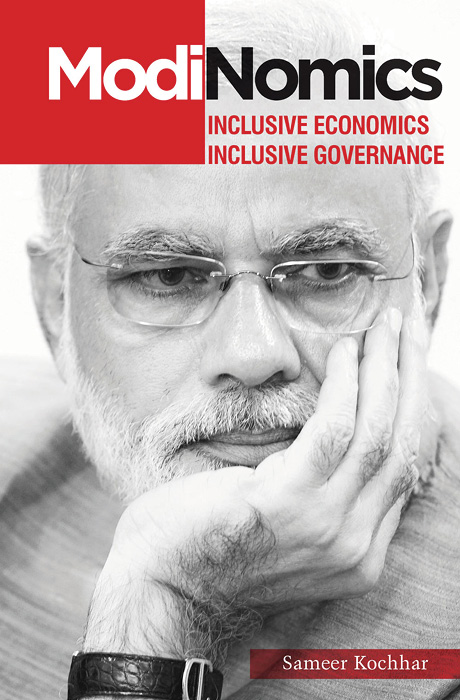
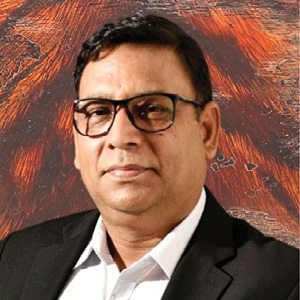
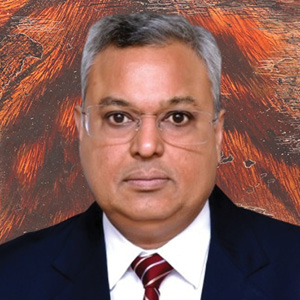
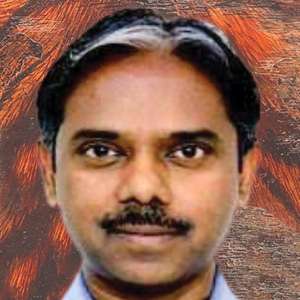
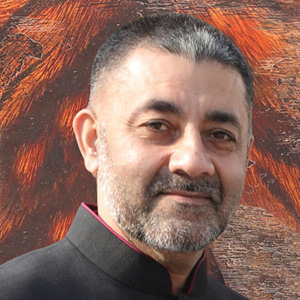
While Inclusive Growth has been on the political radar since 2004, it got a big fillip in 2014, with Inclusive Governance and Inclusive Economics being identified as the bedrock of Inclusion. This was articulated for the first time in the book ModiNomics, released in February 2014 and drew from the Gujarat Model of Chief Minister Modi.
In May 2014, Modi was sworn in as the Prime Minister. His reforms agenda incorporated hitherto unaddressed governance reforms to go in tandem with the economic reforms to make socio-economic delivery sharper. Population scale Information Infrastructure was put in place to make the reach of governance and welfare ubiquitous.
Thinking big and implementing big has been the hallmark of the Modi Government since 2014. Be it Jan DhanAadhar-Mobile; Infrastructure, roads, ports, and airports; Pradhan Mantri Awas Yojana, Pradhan Mantri Mudra Yojana, Aspirational Districts, Har Ghar Jal and so on, the rollout has been fast and furious.
Nine years on and two years of COVID-19 later, what is the State of Inclusive Growth in India?
Summary: Mr Kochhar reflected on SKOCH’s long-standing focus on inclusive growth since 1997, rooted in his own experience as a beneficiary of India’s reform process. He described his work as a historian of contemporary reforms, capturing governance, economic, and digital transformations through more than 20 books. Drawing from *Modi-nomics*, he emphasized inclusive economics and governance as the foundation of the Gujarat model and its national application. He highlighted major achievements of the Modi government, particularly financial inclusion through Jan Dhan and digital inclusion via JAM and UPI. He stressed the need for job-generative, spatially dispersed, equitable, and sustainable growth as India targets a $30 trillion economy by 2047. The speaker warned that competitive welfarism has replaced cooperative federalism, raising concerns about funding social democracy. He argued that the real challenge in inclusion is financing credit outreach and capacity building, proposing mechanisms like a Universal Financial Services Obligation Fund. He cautioned against emerging risks in fintech-driven unsecured and consumption credit, calling for prudent regulation and deeper financial systems to support inclusive development.*
‘Sabka Saath, Sabka Vikas’ Slogan from Gujarat evolved into ‘Sabka Saath, Sabka Vikas, Sabka Prayas and Sabka Vishwas.’ This statement is as inclusive as it possibly can be. Prime Minister has also set a target for India to become a developed country by 2047. At SKOCH, we have always believed that India needs job-generative, spatially dispersed, equitable and sustainable growth.
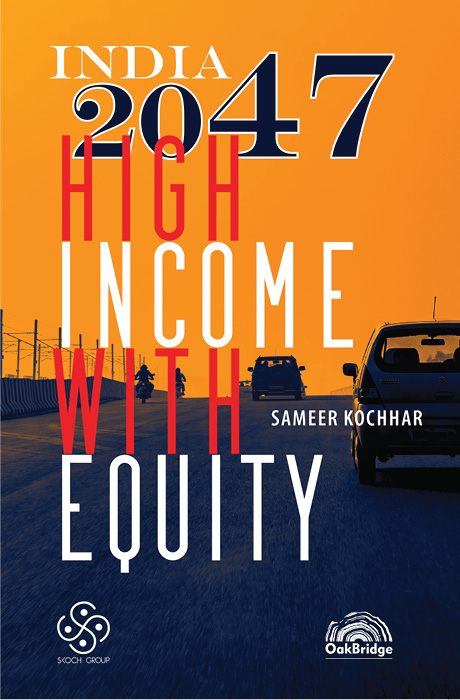
The roadmap for this we have articulated in our series of books, including ModiNomics, Defeating Poverty, Digital India – Developed India, India 2030, and the recent India 2047 – High Income with Equity. Several book recommendations have been implemented; others are work in progress.
The debate on Indian Social Democracy and funding it is far from over and finds prominence in every manifesto. So does the issue of jobs, livelihoods, and inequities. It's time to take stock of to what extent ModiNomics has delivered and what needs to be done moving forward.

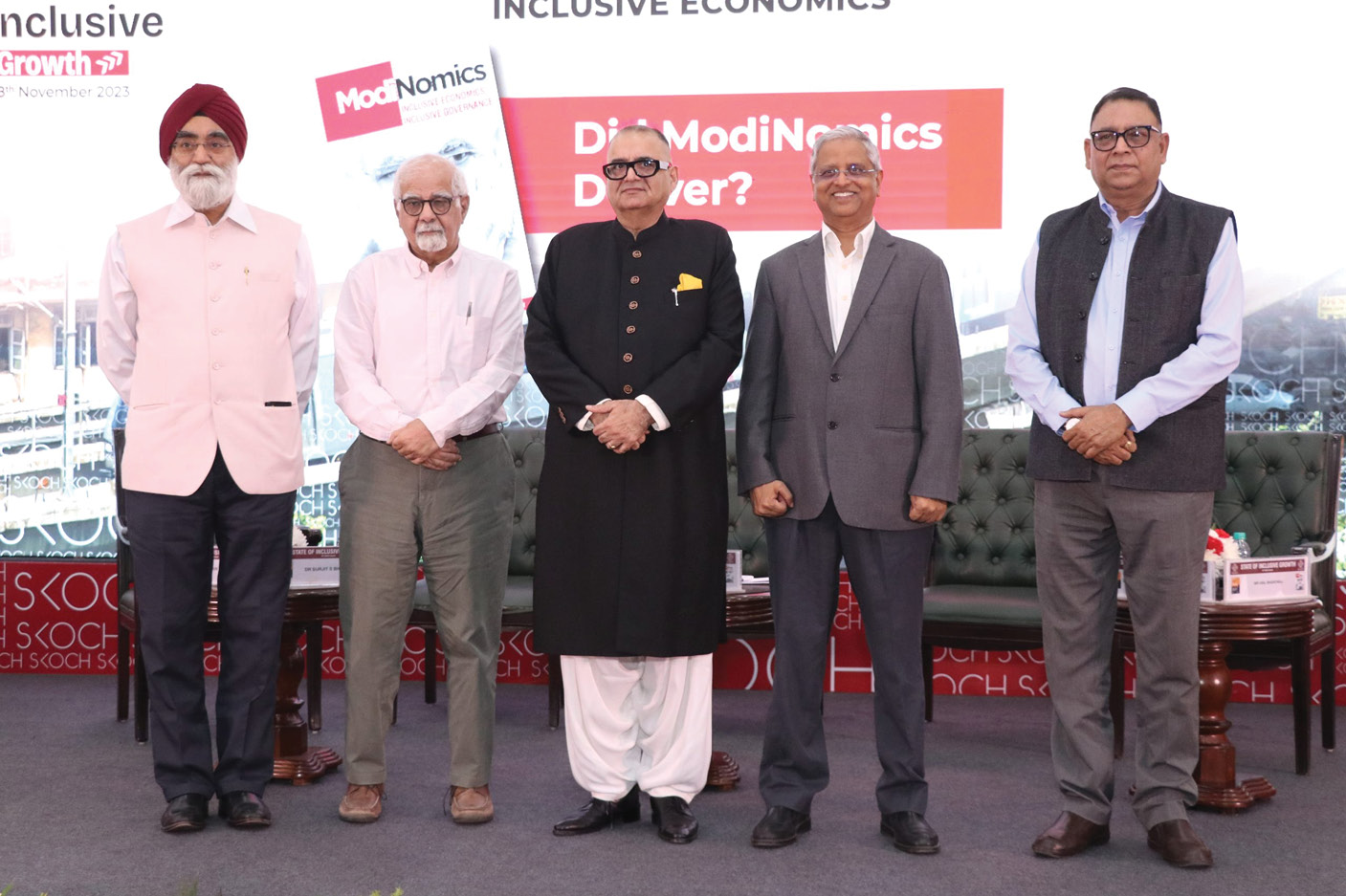
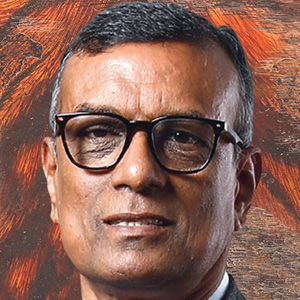
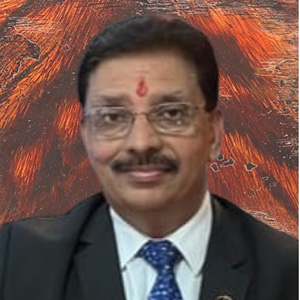
Moderator: Mr Sameer Kochhar, Chairman, SKOCH Group
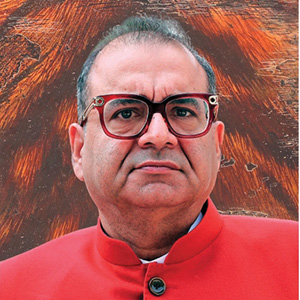
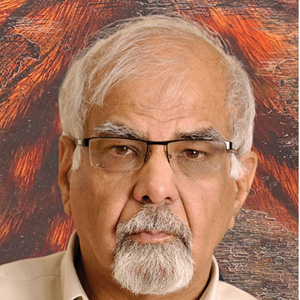
Dr Surjit S Bhalla, Former Part-Time Member, EAC- PM
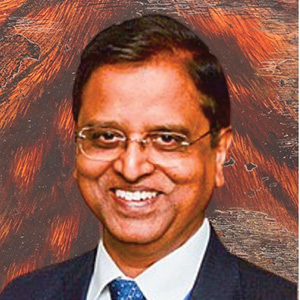
Dr Subhash Chandra Garg, Former Finance & Economic Affairs Secretary
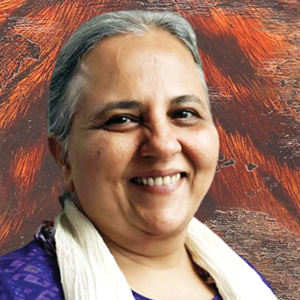
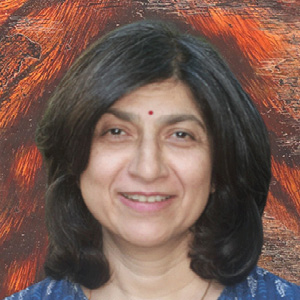
Ms Reema Nanavaty, Director, SEWA
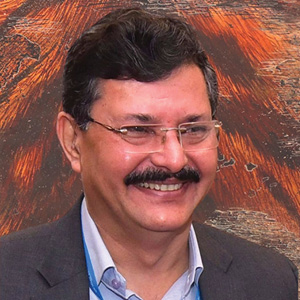
Dr Charan Singh, CEO and Founder Director, EGROW Foundation
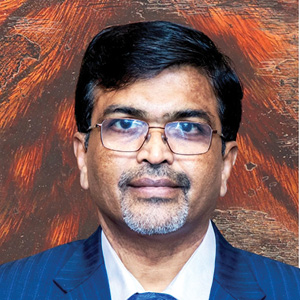
Mr Anil Bhardwaj, Secretary General, FISME
Summary: The session opened with Mr Sameer Kochhar introducing Dr Shamika Ravi and framing the dialogue around the “science of public policy.” Dr Ravi argued that policymaking needs representative, high-quality, real-time data, and that India’s traditional survey systems are often too slow for a rapidly changing economy. She explained how new sources like satellite imagery and global datasets can complement government statistics, especially for issues like “hidden urbanization.” The discussion highlighted that poor data and weak expertise can lead to confident but incorrect conclusions, making better analysis as important as data collection. The conversation then shifted to manufacturing, rejecting the “defeatist” view that India can skip manufacturing and move straight from agriculture to services. Dr. Ravi emphasized manufacturing’s role in jobs, geopolitics, and strategic self-reliance, noting global moves toward industrial policy and reduced dependency. Trade and RCEP were discussed in terms of balancing openness with protection of vulnerable livelihoods, such as dairy farmers. The session concluded by reinforcing that India must stay globally engaged while building self-reliance in strategic sectors like food, defense, energy, and electronics.*
Mr Ajay Tirkey, Secretary, Department of Land Resources, Ministry of Rural Development in conversation with Dr Gursharan Dhanjal, Vice-Chairman, SKOCH Group
Summary: The session focused on land reforms as a critical enabler of inclusive growth, emphasizing land management as the core of effective governance. It traced India’s journey from early computerization of land records in the late 1980s to the Digital India Land Records Modernization Programme launched in 2016. The discussion highlighted major achievements, including nearly 95% digitization of land records, widespread e-registration, and over 80% digitization of cadastral maps. The introduction of the Unique Land Parcel Identification Number (ULPIN/Bhu-Aadhaar) was presented as a transformative step to unlock “dead capital,” improve transparency, and enable precise delivery of benefits. Geo-referencing of land parcels was shown to be vital for agriculture, infrastructure, finance, and initiatives like Gati Shakti. The panel discussed how technology helped overcome state-level diversity, resistance to change, and capacity constraints through unified platforms such as NGDRS. Transliteration of land records across languages was highlighted as a step toward a truly pan-India land market. Overall, the session concluded that comprehensive digitization and interoperability of land records will significantly enhance ease of living, ease of doing business, and contribute to India’s development goals by 2047.*
Credit gaps in India declined by 12.01 percentage points in seven years between 2015 and 2022 as against a mere 6.22 percentage points drop in the previous 14 years between 2001 and 2015, showing an impressive outcome of the Financial Inclusion initiatives taken by Prime Minister Narendra Modi government. The correlation to multi-dimensional poverty outlines how increasing access to credit reduces poverty.
As we celebrate the achievement of universal financial access, it is crucial to consider what comes next. Sustaining and enhancing financial inclusion, ensuring that it continues to empower individuals and communities on their journey to economic prosperity and social development.

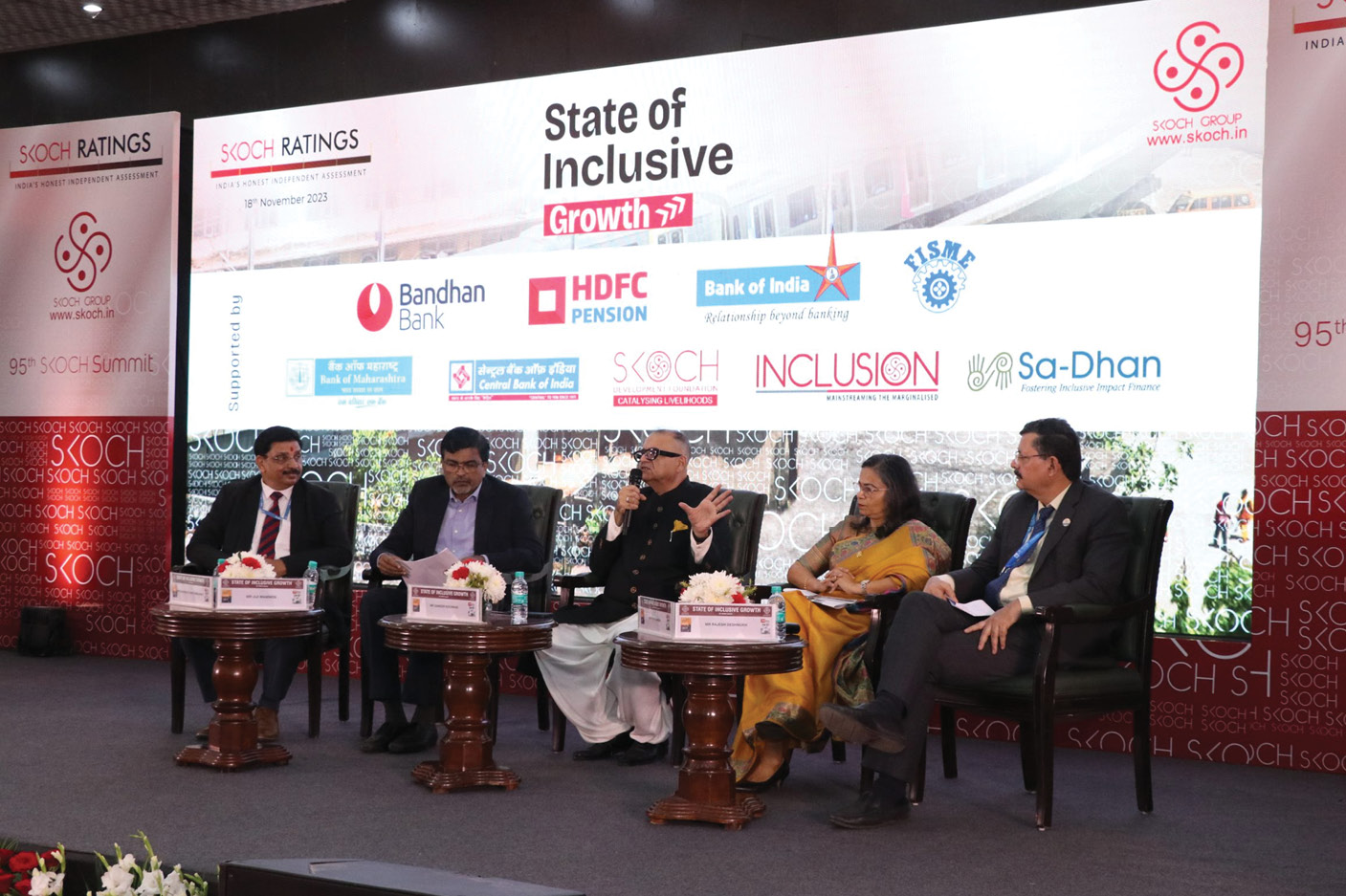
Moderator: Mr Sameer Kochhar, Chairman, SKOCH Group
Dr Sumita Kale, CEO & Senior Fellow, Indicus Foundation
Mr Jiji Mammen, Executive Director & CEO, Sa-Dhan
Mr Rajesh Deshmukh, General Manager Incharge, Bank of Maharashtra
Ms Poppy Sharma, General Manager, Central Bank of India
Mr Dharmveer Singh Shekhawat, General Manager, Bank of India
Summary: The session focused on “Life after Universal Financial Access,” examining how India can move from financial inclusion to meaningful financial growth and poverty reduction. Speakers agreed that the plumbing for inclusion—bank accounts, digital payments, and access infrastructure—is largely in place. The key challenge now is shifting credit from consumption-led lending toward livelihood-linked and enterprise-based credit. Panelists highlighted that capacity building, financial literacy, and handholding are essential for productive credit use but come with real costs. Microfinance and SHG programs have expanded outreach, yet low ticket sizes limit income growth and entrepreneurship. Insurance, pensions, and long-term savings products were identified as major gaps in the inclusion ecosystem. The discussion emphasized that digital access without digital literacy does not automatically translate into development outcomes. A recurring theme was that livelihood-linked credit carries an additional 5–7% cost that banks and MFIs cannot absorb alone. The session concluded with a proposal for a Universal Financial Services Obligation Fund to subsidize this cost and enable sustainable, inclusive financial growth.*
India has made considerable progress in financial development and deepening since Prime Minister Modi assumed office in 2014. The most significant contributor to the deepening of the financial world in the past nine years is the broadening of financial markets and increased awareness and participation in mutual funds and pension funds. The headroom for growth remains enormous, and a large part of the opportunity needs to be addressed.
Other significant contributors to financial deepening in the nine years between 2013-14 to 2021-22 are the surge in non-life insurance premiums and household sector credit. The external debt taken on by the government has been stable, with the debt securities issued by financial and non-financial corporations moderately fluctuating over time.
However, several areas need attention. Notable among them is private sector credit, especially the credit to micro, small and medium enterprises (MSMEs).
Spatial financial dispersal is as essential as deepening itself. The task of doing so is expensive and has additional overheads.
Both financial inclusion and deepening have associated costs in terms of literacy, capacity building and reaching the unreached. These may be viewed as costs to increase socio-economic development, and someone has to foot the bill.

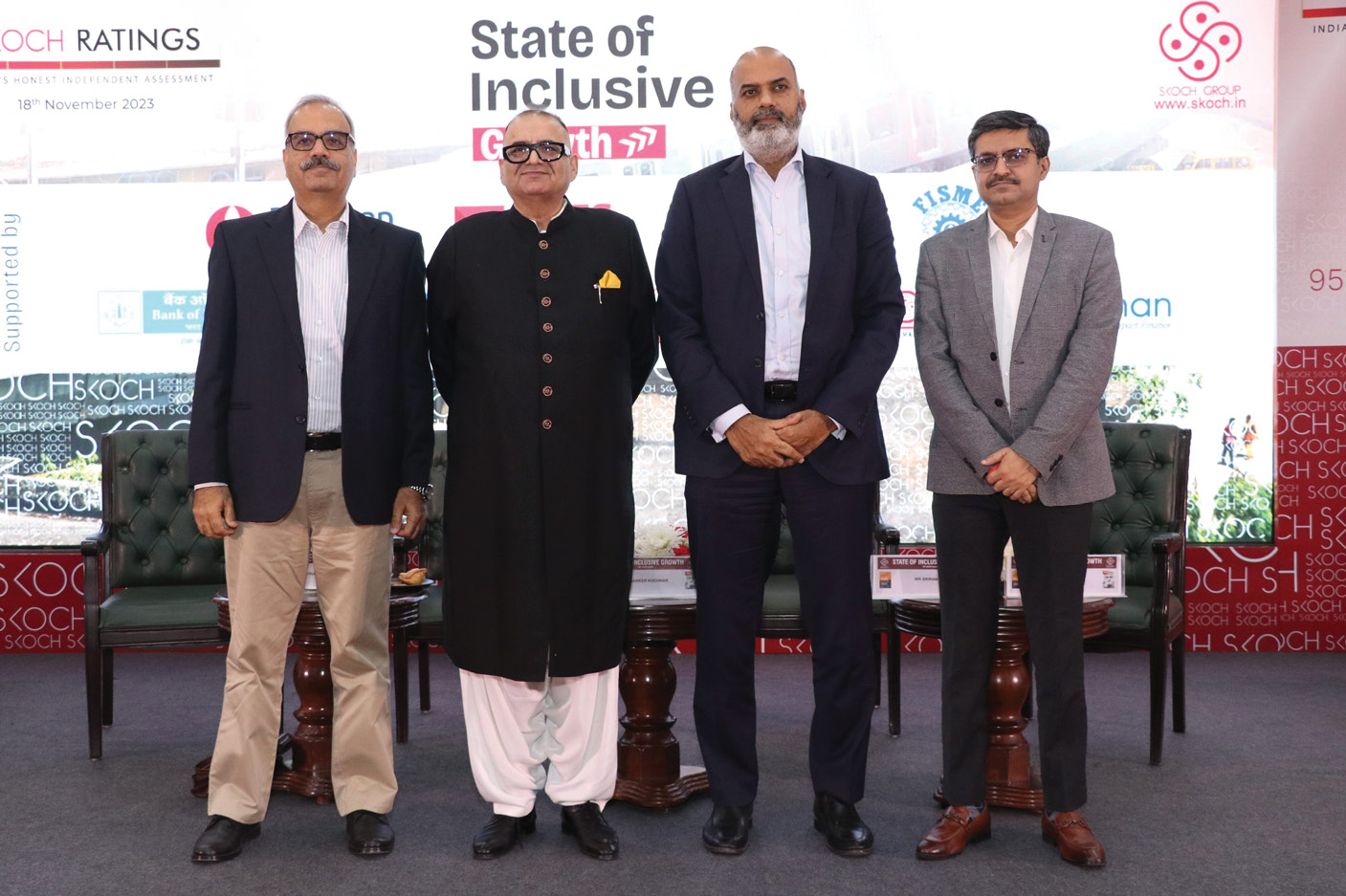
Moderator: Mr Sameer Kochhar, Chairman, SKOCH Group
Dr Deepali Pant Joshi, Former Executive Director, Reserve Bank of India
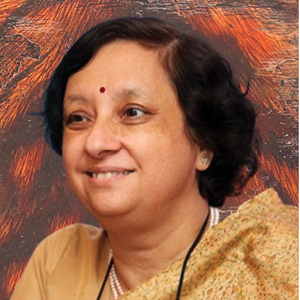
Mr Sriram Iyer, Chief Executive Officer, HDFC Pension Management Company Limited
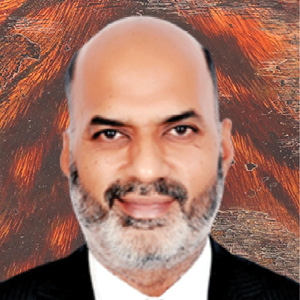
Mr Amit Jain, Chief Operating Officer, Aditya Birla Health Insurance
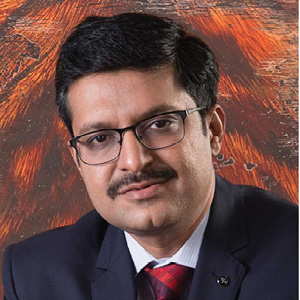
Dr Vinay Singh, Head - SRO and Compliance, MFin
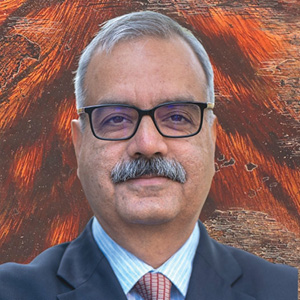
Summary: The session examined how to build a sustainable business case for accelerating financial deepening alongside financial inclusion in India. Speakers highlighted that despite progress, Indian household savings remain heavily skewed toward physical assets like real estate and gold, with low penetration of pensions, insurance, and market-linked products. Financial deepening was linked to the need for stronger financial literacy, product awareness, and trust in formal financial instruments. Panelists emphasized that outreach and capacity building at the last mile carry significant costs, which are currently borne by NBFCs, MFIs, and other intermediaries. The discussion noted that fee caps, monopolistic market structures, and limited margins weaken incentives for private players, especially in pensions and insurance. Microfinance interest rates were explained as a function of high operational and funding costs rather than profiteering. Digital public infrastructure was seen as a major enabler, but simplicity of products and awareness were identified as equally critical. The panel proposed innovative solutions such as pooled funding mechanisms, interest subvention, and last-mile focused products to strengthen financial depth. The session concluded that sustained regulatory support, simplified products, and investment in financial literacy are essential for achieving meaningful financial deepening by 2047.*