SKOCH Summit





India’s development trajectory is unfolding amid a rapidly evolving geopolitical and geoeconomic environment marked by global power shifts, supply chain realignments, technological disruption and climate stress. In this context, governance has emerged as the decisive factor shaping sustainable, resilient and inclusive growth.
Domestically, India’s federal paradigm is undergoing a significant transformation, with states assuming a more strategic role in driving economic outcomes. States are increasingly at the forefront of attracting investment, developing infrastructure, skilling, urbanisation, and delivering social services. Competitive federalism is evolving into a collaborative, performance-oriented framework.
India’s journey towards becoming a developed nation will ultimately be determined by how effectively its states govern, innovate and deliver in an increasingly complex global order.
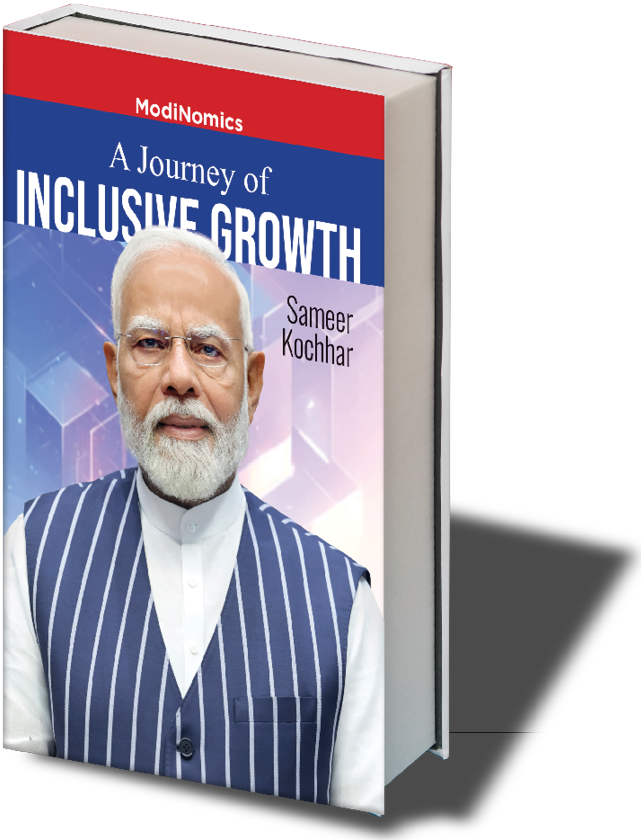
ModiNomics
A Journey of Inclusive Growth
By Sameer Kochhar, Chairman, SKOCH Group
Marking 25 years of Prime Minister Narendra Modi in public office, ModiNomics – A Journey of Inclusive Growth offers a definitive account of his governance and economic philosophy. From Jan Dhan to Ujjwala, Swachh Bharat to Digital India, it explores how millions were brought into the mainstream of development with speed and scale.
The book examines both the vision and the outcomes—financial inclusion, welfare delivery, infrastructure, and digital empowerment—that have shaped India’s transformation. It asks the vital question: has Modi delivered on the promise of inclusive growth, and how far has India travelled on this journey?
Accessible yet analytical, this is not only a chronicle of policy innovations but also a verdict on their impact. A compelling read for policymakers, scholars, business leaders, and citizens alike, ModiNomics captures India’s story of ambition, resilience, and inclusive progress under Modi’s leadership.
Arrival, Tea, Meet and Greet
Picture with Mr Sameer Kochhar, Chairman, SKOCH Group
Lunch
Saare Jahaan Se Achhaa
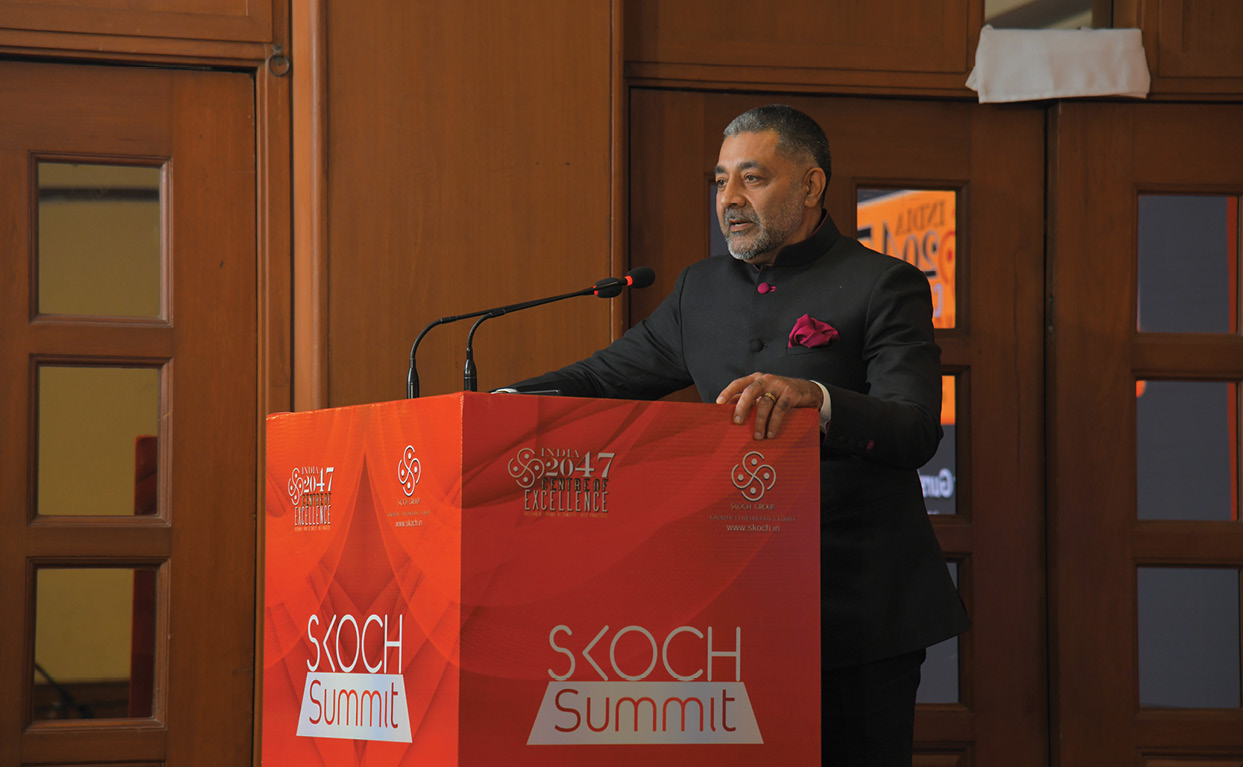
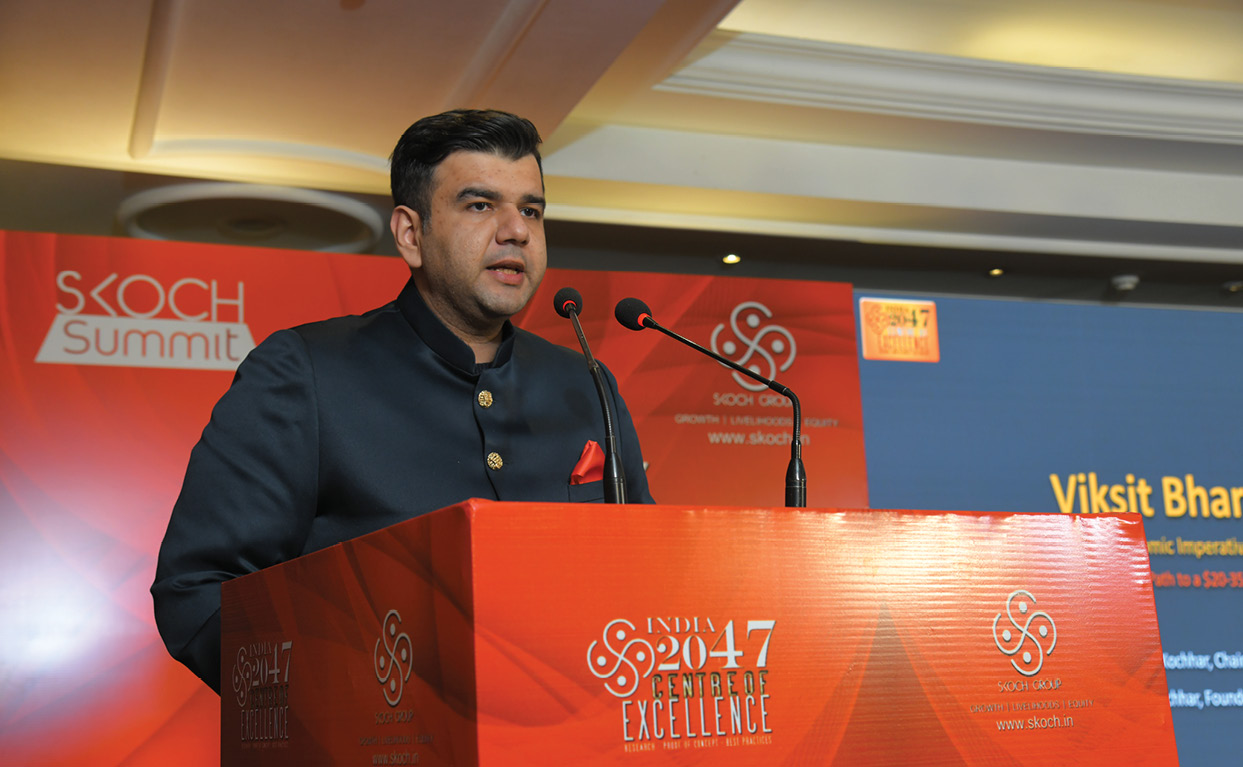
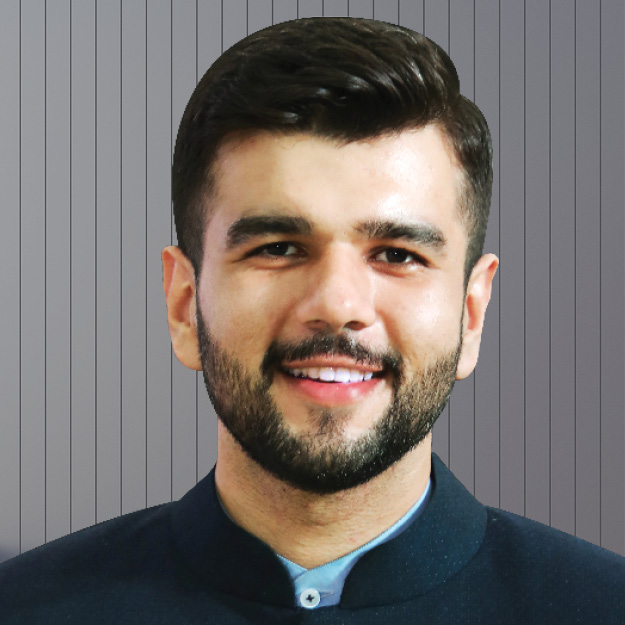
Introduction & Opening Remarks: Mr Rohan Kochhar, Founder, SKOCH Law Offices
Summary: Mr Rohan Kochhar outlines a macroeconomic roadmap for achieving Viksit Bharat by 2047, targeting a USD 20–35 trillion economy. He emphasizes that the challenge is not aspiration but feasibility, driven by hard macroeconomic arithmetic. Sustainable high growth requires efficiency-led expansion through three levers: higher investment, improved capital efficiency, and stronger total factor productivity. He demonstrates that without efficiency gains, the investment required would be fiscally unsustainable. Structural reforms, productivity-enhancing technologies, and deeper domestic savings are therefore non-negotiable. The core message is that India’s path to developed economy status depends on doing more with less—making productivity the central driver of growth.*
View Full Transcript
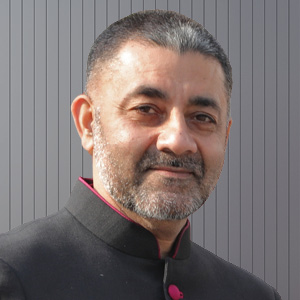
Governing Viksit Bharat: Dr Gursharan Dhanjal, Vice Chairman, SKOCH Group
Summary: Dr. Gursharan Dhanjal focuses on the shift from resourcing Viksit Bharat to governing it, emphasizing the role of knowledge-building and evidence-based policy. He explains how India’s global rankings often misrepresent reality due to inappropriate indicators, and how correcting the narrative significantly improves India’s position. He highlights progress in financial deepening, credit access, and job-generative growth, particularly through microfinance and MUDRA. Using long-term governance data, he shows how states’ priorities and performance have evolved over two decades. He extends the governance lens to corporates, stressing ESG, digital transformation, and human rights in business. The core message is that India’s journey to Viksit Bharat depends on strong governance, accurate measurement, and institutional learning.*
View Full Transcript
Jalsa: SKOCH Award & Cultural Presentation
Tea
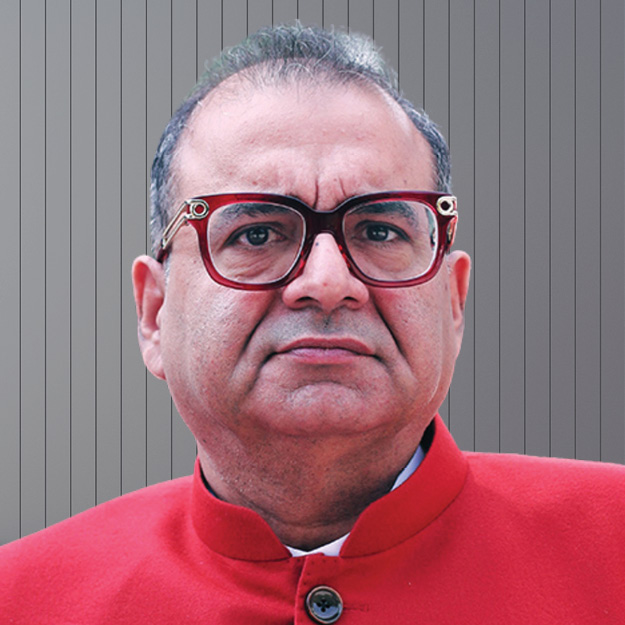
Mr Sameer Kochhar
Chairman, SKOCH Group
Reforms historian and author of best-seller ModiNomics, Sameer Kochhar is Chairman, SKOCH Group. He is a passionate advocate of social, digital and financial inclusion and is a foremost expert on governance and inclusive growth. His work has been acclaimed globally and endorsed by Mr Narendra Modi, Mr M Venkaiah Naidu, Dr Manmohan Singh, Mr Arun Jaitley, Mr P Chidambaram, Mr Yashwant Sinha, Dr C Rangarajan and Dr Montek Singh Ahluwalia and so on. In his thinking and writings and activities, his profound admiration for India's economic reforms and in extension, those outstanding personalities who strive to make these reforms more meaningful and broad-based comes out clear and unambiguous.
View MoreMr Rohan Kochhar
Founder, SKOCH Law Offices
Rohan Kochhar stands at the intersection of economics, social science, and law, leveraging his multidisciplinary expertise to drive impactful change in public policy, emerging technologies, and ESG (Environmental, Social, and Governance) initiatives. As the founder of SKOCH Law Offices, Rohan has built a boutique law firm renowned for its deep domain knowledge and innovative approach to legal challenges.
View MoreDr Gursharan Dhanjal
Vice Chairman, SKOCH Group
Dr Gursharan Dhanjal, MA, MPhil, PhD from Delhi University and an expert in strategic affairs, is Vice Chairman, SKOCH Group. He is also the Editor of INCLUSION—a quarterly publication that focuses on development and addresses inclusive growth-related issues. INCLUSION has completed six years. He has over 20 years of work experience ranging from academics to research and business journalism to consulting. He started his career as an Assistant Professor and taught at Delhi University for five years before joining Asia Business News (India)—Dow Jones, a premier broadcaster of business and financial news during the mid-90s. He also worked for CNBC for over three years during the late 90s.
View More* This summary content is AI generated. It is suggested to read the full transcript for any furthur clarity.