SKOCH Summit

Mr Sameer Kochhar
Chairman, SKOCH Group
Reforms historian and author of best-seller ModiNomics, Sameer Kochhar is Chairman, SKOCH Group. He is a passionate advocate of social, digital and financial inclusion and is a foremost expert on governance and inclusive growth. His work has been acclaimed globally and endorsed by Mr Narendra Modi, Mr M Venkaiah Naidu, Dr Manmohan Singh, Mr Arun Jaitley, Mr P Chidambaram, Mr Yashwant Sinha, Dr C Rangarajan and Dr Montek Singh Ahluwalia and so on. In his thinking and writings and activities, his profound admiration for India's economic reforms and in extension, those outstanding personalities who strive to make these reforms more meaningful and broad-based comes out clear and unambiguous.
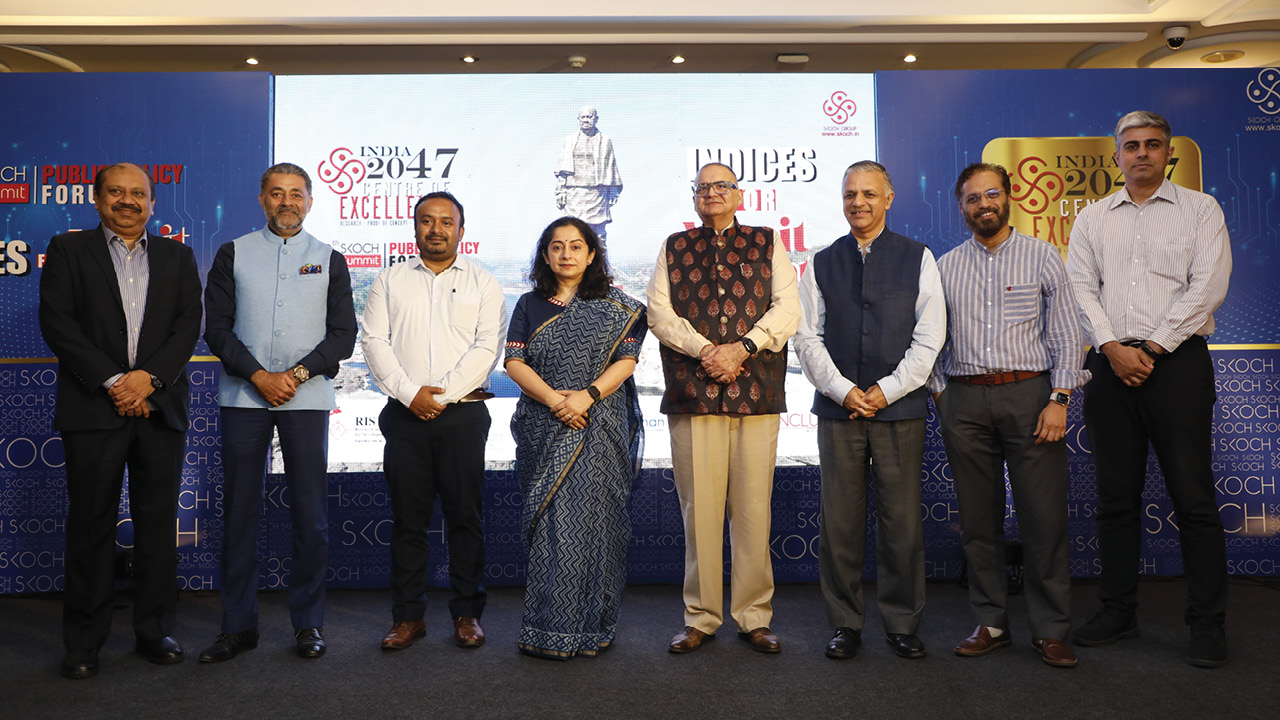
Mr Sameer Kochhar at the 98th SKOCH Summit: Indices for Viksit Bharat
Mr Sameer Kochhar
Chairman, SKOCH Group
Key Points*
- AI cannot replace culture and context; some human, tradition-bound practices (like making pickle) will remain human-led.
- A “peeling day” family ritual around mango pickle illustrates how culture is institutionalized in everyday life.
- Viral response to “AI can’t make pickle” showed global resonance of culture-over-automation arguments.
- Post-WTO constraints limit tariff actions, pushing the world toward non-tariff barriers as trade tools.
- ESG/CSR and similar frameworks often repackage Indian moral principles but are defined and enforced via Western benchmarks.
- Global indices and human-rights/development narratives are framed largely from a Global North perspective, not Global South realities.
- Indian public policy has been “hostage” to economists across domains, reducing space for social scientists and domain experts.
- Employment debate illustrates data vs field reality; surveys have inherent bias and truth lies between spreadsheets and lived experience.
- Three-pronged response proposed: improve existing global indices, create global indices where India can set benchmarks, and create Indian indices to counter-measure global performance.
- Many global rankings mis-measure India (HDI, hunger, gender, e-governance, sovereign ratings) by ignoring federal structure, subsidies, DPI, intermediaries, and rapid tech shifts—raising borrowing costs and narrative risk.
* This content is AI generated. It is suggested to read the full transcript for any furthur clarity.
Transcript
इस सम्मेलन के विषय और विषय वस्तु से अवगत कराने के लिए अब मैं निवेदन करूंगी समीर कोचर जी से, जो अध्यक्ष हैं स्कॉच के, कि वह मंच पर आएं और हमें आज के इस थीम से, इस टॉपिक से अवगत कराएं। आप एक सुधारक है, इतिहास काक हैं, और स्कॉच ग्रुप के चेयरमैन के रूप में आप जाने जाते हैं। आपने 20 से अधिक खंड लिखे हैं, यानी पुस्तकें लिखी हैं, जिसमें से सबसे प्रशंसक पुस्तक मदी नो मिक्स एंड द लेटेस्ट पीइंग इंडिया 207। उनके काम को विश्व स्तर पर सराहा गया है, और श्री नरेंद्र मोदी जी, श्री एम वकया नायडू, डॉक्टर मनमोहन सिंह, श्री अरुण जेटली, श्री पी चिद्रम और भी बहुत से दिग्गजों ने उनका समर्थन किया है, उनकी प्रशंसा की है। लेडीज एंड जेंटलमैन, विथ योर राउंड ऑफ अपलॉज, मैं प्लीज कॉल अपऑन स्टेज समीर सर, चेयरमैन स्कच।
So every time you no I come up to this podium, I try to sher something personal. So one of the things that you no I’v of wund n I also attend conferences, so der’s jus room exclusive area ver speakers sit bifor the conference and de supoz to hav veri nlight conversation, and I love been curious e to vt i tt talk abaut.
तो आज मैं आपसे शेयर करना चाह रहा हूं कि हमने बाहर बैठ के क्या बात की। तो व बड़ा इंटरेस्टिंग टॉपिक है। मैंने तो यह बात करी कि एआई, आर्टिफिशियल इंटेलिजेंस अचार नहीं डाल सकती। You no, we’r having conversation on how the world iz moving tuvwrds A I, der this hol tiv about जबले सनेस and this entays coming out today ch i generation एलम will be disfunctional, bikoj vt ever we ar teaching sus large language models, nothing new i being createdted, so den I told no culture and context ar to things missing, wo नहीं हो सकता।
तो यह मैंने personal experience से बोला क्योंकि मैंने अचार डालने की प्रक्रिया को institutionalize कर दिया। इतना ज्यादा हमारे culture में inbuilt है कि हमारी family में peeling day होता है। जब summer solis खत्म हो जाता है, 21 जून के बाद जिस दिन बहुत भारी भारी बारिश होती है, उस दिन को हम peeling day बोलते हैं, और उस दिन आम का अचार डलता है, और पूरी family इकट्ठा होकर उसको डालती है।
तो यह मैंने कहानी जो है लिंकडइन में पोस्ट करी, अचार की फोटो के साथ। 6 लाख तो उसको view आए। अब मैं मतलब economy पर लिखता हूं, तो मेरे ख्याल 6000 नहीं आते, but यह post जो मैंने लिखी कि AI can’t make pickle, 600000 views, some almost like 100 shares, and it’s kind of you no re sounding globally।
So somebody took up the challenge and he se ke नहीं, AI pickle बना सकती। उसने recipe भेजी। तो उसने जो recipe भेजी, मैंने बोला ये बना के आप देखिए, ये खाने लायक नहीं है। उसमें कलजी इतनी ज्यादा डाली कि कड़वा बनेगा अचार।
So I am just tryim to give you a perspective: things that will never change—our culture, our context, our traditional—going to change, and you will always need human beings in this artificial intelligence driven world. So let’s not go by this narrative: you and I are never going to be there।
Was this article by Ram Madhav ji, op I think in Indian Express, ver he talkd about how this liberal left narrative t has been going on for decades in the world has to change into account the change political reality and global dynamics and has to move tuvwrds more more of a conservative right।
तो यह left liberal क्या है और इस naret के क्या मायने हैं और उसका क्या फर्क हमें India में पड़ता है, यह मैं आज आपसे बात करना चाह रहा हूं। आपको पता है कि WTO, you no, after the signing of WTO, der is nothing much t you can do but tariff and thing like t. You can’t se t India will impose so much tariff on laptop and it will impose so much tariff on this t and the other, bikoj no country can do that unilaterally, so der very little t can be dun on the tariff front।
So the entays of the world today i tuvwrds non tariff barriers। तो क्या हुआ कि Russia के against ban लगा दीजिए, bikoj wo Ukraine se war कर रहा है। उसका trade से क्या लेना देना है? T’s other th. या आप किसी और country के against ban लगा दिया, Iran के लगा di, उसकी human rights खराब है, उसका कुछ—so a lot of multiplicity of objective i coming in।
And in most cases it is the canned wisdom of India, जो एक हमारी अपनी moral science होती थी—किसी का बुरा नहीं करना, सदा सच बोलो, किसी को तंग नहीं करो—जो हमारा अपना culture है, उसको package कर दिया कि जी इसका नाम ESG है, इसका नाम CSR है, इसका नाम यह है, ये अब आप implement करो, और उसको implement करने की process हम बताएंगे आपको। अरे भाई साब, तो हमने बनाया था, आप क्या बनाएंगे?
और हर country का context फरक है। So what happens i ke morality हमारी, मापदंड उनके। So our morality but benchmark is this. We se take care of the people, last person in the line, you must take care of that person first. Gandhi ji said t, and all this thing i coming repackaged to us as human development, human rights, this that and the other, and they are being defined in a very western concept. They are not defined keeping global south in mind. They defined keeping global north in mind.
And the problem is ke in लोगों को बोलता हूं, एक Kenyan economics के भक्त है, क्योंकि जो काम economist का भी नहीं है, wo काम भी economist करते हैं। So our public policy has been you no kind of, specifically in India has been, kept hostage by economist for far too long.
So climate की बात करनी है तो economist करेगा, health की बात करनी है तो economist करेगा, self help group की बात करनी है तो वो भी economist करेगा, nutrition की बात करनी है तो वो भी economist करेगा। तो बाकी के लोग क्या करेंगे? और आपको इन सब चीजों का ज्ञान है, domain knowledge है।
तो एक space जो कि social scientist के लिए होनी चाहिए या domain experts के लिए होनी चाहिए, by following this very global north oriented model we have let go. And the end result is that you find that India’s narrative are very very poor.
So to address this problem, प्रधानमंत्री जी ने बोला कि 207 तक हम एक विकसित देश बन जाएंगे। We going to be developed country by 247.
So what is it that we ought to do as civil society, as external forces? So we—identification ऐसा है कि जिस चीज की government को जरूरत होती है, wo government जान लेती है। जिस चीज की जरूरत नहीं होती है, उसको नहीं जानती। Government i n person, government i system. So you actually have to work with the system, make sure t whatever you se i adding value to the system and der agenda, and der whatever you do will be taken note of.
And to do this, we pick up three area. One area: research. Research our first focus on researchs, census, global indices. What is this India narrative?
अब जैसे कि आपने देखा होगा कि आजकल employment में बहुत चर्चा चल रही है। तो अब employment है कि नहीं है, इसी पर सवाल जवाब हो रहे हैं कि बहुत ज्यादा बेरोजगारी है। और कहते कोई कहता है कि बेरोजगारी नहीं है। So where i the truth?
या तो आप अपने कमरे में बैठ जाइए, एक excel spreadsheet बना दीजिए, उसमें खूब सारा data डाल दीजिए, और wo macro economics की thery लगा लग के बोलिए कि इतने million लोग बेरोजगार है। या फिर आप खिड़की के बाहर झांक के देख लीजिए कि कितने बेरोजगार आपको दिख रहे हैं।
तो जो economist approach है, या जो survey वाली approach है, large sample वाली approach है, वह spreadsheet वाली approach है। और जो दूसरी खिड़की के बाहर देखने वाली approach है, wo field research वाली approach है।
So if you go outside, इसका भी मैंने experiment किया कि हम लोग यह naret को कैसे विश्वास कर लेते। How do we start believing in this tiv?
So I made a post on LinkedIn saying t how many people can refer to me three suitable candidates t ar unemployed. So 56 per people sed t de can, de no three people hu ar suitable and ar unemployed.
So de d not entaysipate ma next question. My next question was send me the resume, bikoj we no lot of people hu hav an vacancy. Got one resume of guy still working and i about to be sucked. So where i the truth?
So so der I’m not se der i no unemployment, der no joblessness. The truth la sum in between. So you can neither take entire n economic, macro economic yardstick, nor you can take only a field research. They have to meet somewhere, and that center i what we ar trying to find.
So this i the nature of research.
W do. I came a report called job generative impact of Modi nomics in top 10 last 10 years, and the report talk about under credit led growth how many people have created documentsfragment ज्यादा create. So someone has to do this reality check and set this i what the truth. Let’s not go by the narrative.
Of the other question I ask—इसके आप सारे बैठे यहां पर—I ask y t आप में से एक आदमी है जिसने यह बेरोजगारी का survey भरा हो? ये बड़ा large survey होता है, बहुत wide scale होता है। I have yet to come across one person hu has fed in this employment survey, so called ch i national survey, and very large it gets, n na d fill survey.
यह survey इतने सारे पन्नों का है, और आपको कोई बच्चा आकर बोल देता है कि हां जी survey करना है, बेरोजगारी का है, तो आप उसमें भाग लेंगे क्या? 100% आप उसमें तभी भाग लेंगे जब आप बेरोजगार, आपके पास टाइम ही टाइम है। It th. So there in inherent bias in such survey.
So what we are trying to do is we are trite put some sense of—आप जरा statistics के पर्दे के पीछे झांक के देखिए कि इसमें सच क्या है।
Example I give: जब हम छोटे होते थे तो हिंदुस्तान लीवर से survey करने वाली ladies आती थी। अब हम बड़े नीचे तबके से थे और देसी साबुन की चक्की से कपड़े धुए जाते थे घर में। तो survey वाली aunty आती थी और पूछती थी कि आप कौन सा साबुन use करते हैं? तो मम्मी बोलती थी Rin, because in the eyes of that survey lady she looked of a higher तबका than she actually was. And this is how most of India responds to surveys.
It’s also hard fact कि वो जो survey ले रहा है, वो चाहे कुछ भी ना हो, but उसकी नजरों में आपकी क्या अहमियत है, वो आपको दिखाना बड़ा जरूरी है। तो आप जवाब भी गलत देंगे।
So keeping these things in mind, we said we have to look at some of these surveys and see where the truth is.
So what has happened in post WTO world is that nationalism—every country wants to. To सबने sign कर दिया तो उसका सबसे बड़ा beneficiary कौन हुआ? WTO का biggest benef China. Lot of manufacturing move to China.
So now they have realized this i mistake. We can’t do this. So manufacturing has to come back from America to Europe. To everyone i trying to bring the manufacturing sector back.
So what i to be done then? Because आप trade barrier का तो कुछ कर नहीं सकते, so you will say that जी आपके generic pharmaceuticals तो बहुत अच्छे हैं India में, good inexpensive pharmaceutical, but आपका ESG बड़ा खराब है, so therefore we will not buy from you.
So to completely unrelated areas. So these are the kind of compliance that are being created.
दिया व e governance का index है, उसमें भी parameter की उसमें अहमियत है कि नहीं है। आप हर parameter में, हर index में अगर आप डाल दोगे तो आपकी ranking कमी होएगी। इसकी अहमियत क्या है? यह index में होना भी चाहिए—कोई पूछता नहीं है।
So what we are doing is—इसके तीन solution है।
पहला solution इसका यह है के आप global indices को लीजिए और उनको देखिए कि ये parameters क्या use करते हैं, what is it that they are really measuring, and then question the liveness of it and say is this appropriate.
दूसरा यह है कि आप Indian indices बनाइए, कि इस area के अंदर index ही नहीं है तो यह हमारा है, तो यह मापदंड अब हमारा हुआ, अब आप बताइए इसके अंदर आप क्या कर रहे हैं। So t again will change the conversation.
So there are three possible approach, and what we do present to you today is all three, and what is it t can be done, and if this is relevant to answer such question government will surely take note of it because we’ll see this is relevant.
So if you look at the India narrative in global indices: in human development 134 out of 193, in hunger we are i out of 125, gender inequality 108, even song t rating i B3, e government development index 5 out of 193.
Now these are various global agencies doing that, and how many of you would even if you don’t know about our areas, how any of you would agree that in e government we are 105 out of 193 countries? I don’t think any one in India would agree to that rating.
So as I said, there are three options. One option is look, discuss and suggest improvements in the current indices. Second option is create global in green field areas like corporate digital responsibility and ESG where India has a story, and we say now you measure it as per our benchmark. And the third is create Indian indices to measure global performance as a counter to the existing global indices.
Means आपकी परिभाषा human rights की है, हमारी y है, तो आप हमारी परिभाषा पर कितने खरे उतरते हैं, यह बताइए। So these are the three possible approach.
And you know, our Excel center has been on this very extensively, option one: look, discuss, suggest improvement in the current indices.
So there are several valid crit of global indices. If you look at human development reduced to number, ये आपके 5 b 10 number है human development में, तो वह क्या हुआ, w एक average आ गया। तो उसमें क्या है कि मेरी human development और अंबानी साहब की human development average हो गई। यह क्या सही तरीका है?
If you बोलिए कि एक आदमी 1 r कमाता है और दूसरा आदमी हजार करोड़ कमाता है, तो उसकी आप average ले लीजिए और बोलिए जी average दोनों मिलाकर average जो है जी 5000 करोड़ कमा रहे हैं। सही माप दन है क्या? So there is a problem.
Second is there is emphasis on income. अब India के अंदर there are so many subsidies t we give. We look at multi dimension poverty. आपके पास रहने का मकान है कि नहीं, आपके पास पीने का पानी है कि नहीं, आपके पास खाने का राशन है कि नहीं, आपका बच्चा school जाता है कि नहीं.
And there are development models that are more applicable in global north then global south. You have to provide all these things as a function of governance. They add up to something right.
Because if you are having an income of 00 and on top of that you are paying for your ration, you paying for your school, you paying for your health, you would need that much more income. So instead of doing that, the government is giving you all these things as subsidies.
So should you ignore that such things are happening and not count them as income? But it’s a conditional money transfer in kind income, ch has been transferred to you.
There are data limitations. Reliable data may not be available leading to. Neglect of equality: as I said it doesn’t measure inequalities within the country.
Similarly hunger—hunger के अंदर भी measurement challenge है. There is a lot of political manipulation t happens. Narrow focus: some indices may just focus on caloric intake without nutrition quality or aspect of food security. Short term focus.
Same thing with gender indices. There is a cultural bias. Now if there is cultural context to women empowerment, let’s say in Saudi Arabia and in India, can you negate that and say now you take our yardstick? So there is a one size fits all approach which not work. So there is a need to have variation, ch ar maybe country by country and region by region.
E government index: digital divide may not be fully, you know, can you access digital technology is one story but can you use them is another. Then there is cultural context: how do people interact with the government, do they interact with the government directly, do they interact through intermediaries.
And then there are rapid technological changes. आप measure कर रहे हैं landline और दुनिया तो mobile हो गई, तो index ही गलत है।
So in this context, there are some of the example of Indian reality. So जो human development index है, अब इसके अंदर यह है कि secondary education वगैरह में जाके higher learning में जो है, mean years of schooling ज्यादा India में नहीं होती है क्योंकि गरीबी है, तो लोग कम पढ़ते हैं, उसके बाद काम करना शुरू कर देते।
तो हमें क्या measure करना है? Mean years of schooling measure करनी है कि कितने लोगों ने enroll किया school में, वो measure करना है.
Similarly gross national income per capita—जो मैंने बताया कि आप सिर्फ income पर देख रहे हैं कि उनकी development हुई कि नहीं की—अगर उसको हम डालने sanitation में, pipe drinking water facility में, household with electricity connection and पक्का houses, तो सिर्फ इतना ही बदलने से हमारी rank जो है 134 से 97 हो जाती है.
Not t I agree with rest of index, but I’m se चलिए आप ही का मापदंड मांग लेते हैं, but कम से कम data तो आप सही लगाइए इसके अंदर.
So correct just this much, just look at the huge jump you get on human development.
Same thing with hunger index. Our current rank t i out 12. Child stunting with child underweight and child mortality wi nnet mortality rate, rank jump to 75 out of 125.
Gender inequality—favorite subject again—re European construct. So large amount of weightage given to elected female representative in the parliament. In Europe, all r country li parliament r large country bi peol federal structure.
So we’ve central government, state government and panchayati raj. So if you add elected women across the three tiers, we would possibly have the largest content of elected women, I think close to . million if we take care of all the contingent, and rank 76.
So gender equality की परिभाषा जो है, w सिर्फ t तक क्यों सीमित रखी आपने? Parliament में क्या होता है? They have legislative power. They empowered. So gram pradhan, so women hu minister in state government, how is he any different? It is just t they simply don’t get a federal structure.
Similarly global gender: एक और चीज डाल दी, female की life expectancy क्या है, उसके आगे une एक शब्द बोल दिया कि healthy life expectancy क्या y. Health कौन define करेगा?
अब gender gap में आप या तो gender map कर लीजिए या आप health map कर लीजिए. Health के लिए आपके पास अलग index है ना. इसके health के indicators होते हैं. तो यह आप complex problem क्यों create कर रहे हैं?
So this is something t India needs to question. So if you say our health record i pur, okay I agree, so let me be rated poorly in health, but I rated poorly in gender because higher percentage of women may not be healthy but overall population l’s larger percentage not be.
So what is the next? E government is the second area. Now the biggest success story in India is mobile jan dhan, aadhaar mobile, public digital infrastructure, and you know you’d be shock to note in any global e governance index public digital infrastructure not taken into account. Is it even believable?
And they are still measuring broadband internet services कि कितने घरों में broadband internet connection है. सबके पास हाथ में तो 5G लेकर घूम रहे हैं. अगर वह 5G subscriber आप India के ले लीजिए या broadband mobile internet के ले लीजिए, तो मतलब आधी दुनिया की population एक तरफ और हमारे subscribers एक तरफ. Broadband घर में किसने telephone तार से लगवा रखा है?
So we have bypass t thing. So why is it t India doesn’t question this? Okay, why telephone users replace by mobile phone users? Expected year of schooling—अच्छा, e governance से expected years of schooling का क्या लेना देना है?
Even my domestic staff ch i veryly educated can work on mobile. They send SMS, they send voice messages, they can transfer money on UPI. What edu govn?
So again you find e govn education criteria. Bik e governance का तो माने ही y है कि आप चाहे पढ़े लिखे भी नहीं है, आपको उसम include करना है. तो आप voice से भी काम कर सकते हैं. IVR भी है हमारे. So this is again not question.
Online services available has to be replace wi online services provided by the government. हमारे y intermediary CSC, common service center, banking correspondents है. अगर आप पढ़े लिखे नहीं हो तो आपको एक intermediary की सुविधा है कि आप इनके thru उसको interact कर सकते हो.
And there are very large number of transactions in India that happen thru intermediaries. So this is also not taken into account.
So if we just change this much, our rank of 105 out of 193 jumps to 17 out of 193, or you can clap.
So the thing is who will engage? The problem is that within the government there is no capacity, and if this question is referred to within the government, l possibly go to an economist who would not understand digital technology and the socio economic dimension and may just end up agree with this, which is their view point.
And that is why these indices have not change because if you look at other countries, who are the people who study these indices, and you know, so you will see social scientist doing it, you will see people from domain working, but India, the pickler country, r only in. So there is lot of gap in terms of socio economic reality.
And yes they are also very relevant, but you have to find the center between statistics and social reality.
Sovereign ratings—अब यह घूम के सारे index आपको पता है कि sovereign rating के अंदर world governance index नाम की एक चीज है, उसको भी देखते हैं. उसका क्या लेना देना sovereign rating से कि आपने उधार लिया तो आप वापस दे सकते हो कि नहीं दे सकते?
So if you just look at Moody’s, which i suppose to be the gold standard, they look at income growth, they look at average real GDP growth, median absolute growth, deviation. Two areas.
They don’t look at stock market capitation to GDP ratio, trade to GDP ratio, manufacturing purchasing managers index. Scale of economy is measured only by nominal GDP. What about capital expenditure to GDP ratio? What about foreign exchange reserve to external debt? What about external debt to GDP ratio?
In national income they look at only GDP per capita consumption, and discuss it with them.
Similarly quality institution policy effective. So they’ll se ke quality of institution में w ले लेते literacy rate. अब literacy rate का sovereign rating से क्या लेना देना है? और अगर आपने देखना है तो फिर आप उसकी impact assessment कीजिए कि literacy आपने दे दी, उनको आता भी है कि नहीं आता है. Literacy कौन सी? Literacy आपको चाहिए economic literacy चाहिए क्या वोह काम कर सकता है? Sovereign rating का किससे लेना देना है क्या आपने उसे रामायण पढ़वा नहीं है?
So policy effective: fiscal policy, monetary policy. India i a startup story. We are also improving in ease of doing business. We are also improving in multi dimensional poverty. We are improving in health care expenditure to GDP ratio. So why is this not policy effective? Why? Because it is not relevant to Europe.
Fiscal strength: they measure only by debt version. भा आपकी capability क्या है debt पे करने की. Countries revenue to tax, not GDP क्या है.
तो अगर यह हम सारी चीजें उन्हीं की परिभाषा लेकर उन्हीं को पिला दें, तो हमारी यह rating है. हमारी rating एव आती है B3 से, जो कि China और USA के बराबर है.
तो एक जो मैंने बोला, दूसरी approach के अगर हम अपना index बताए, तो हम बोल रहे कि Pakistan में क्या हो रहा है, Afghanistan में क्या हो रहा है, हमें नहीं लेना. हम top 10 economy ले ले दुनिया की.
और जो मैंने parameters बोले हैं, सिर्फ दो p हमने study किया है: एक sovereign credit rating प, और एक e governance में. This i real data. I can give you the data, and any one can actually check it.
UN rank for China in e governance i 43. India rank 105. 2 3 i Japan. Four i Italy. Five i France. Six i Canada. Seven i Germany. Eight i UK. Nine i Brazil. And 10 i USA.
Same thing on sovereign rating. If you take into account the broader parameters t I mention, India’s rank, China rank and USA rank and Germany rank and Canada rank i the same.
And why this matters? It matters because it impact your borrowing cost. It impact r FDI. India today borrows at higher rate of interest then USA does because our rating i B3. Why should it be B3?
Problem: r no system within the government. You go to ministry of statistics, they sl part of it. You go to social sciences, I don’t know ch ministry l u after social science. R ministry lki so sa social n. De lft social welfare SC ST OBC. No social science. There n ministry social and social development, social justice, but you don’t have social development. So t’s possibly a gap.
So with this I come to the end of my presentation as to how the global narrative driven by the global north is creating this anti India thing led by the liberal left narrative t has been going on for 40 50 years, and the time is now to give a knowledge based answer to this.
So this was one approach, which is उन्हीं के index लो, उनको ठीक करो, और उनको बताओ कि हमारी actual ranking क्या है.
So now I come to part two: what India is a digital success story, and what we are doing in digital is not well known at all in the world.
And if the whole world is going to be digital, there is going to be a concept of corporate digital responsibility and a government digital resp—how responsible, like you se corporate social responsibility is how responsibly are you digitally, because the whole world is going digital.
And so we worked out n a framework and an index, and we have श्री जी who is going to be presenting that. We put together actually a task force. So this is the work of the task force t he is presenting.
Come Shri ji.