SKOCH Summit
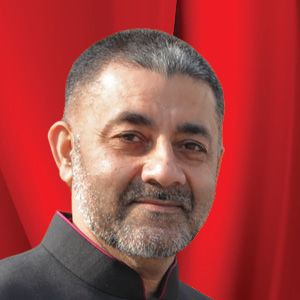
Dr Gursharan Dhanjal
Vice Chairman, SKOCH Group
Dr Gursharan Dhanjal, MA, MPhil, PhD from Delhi University and an expert in strategic affairs, is Vice Chairman, SKOCH Group. He is also the Editor of INCLUSION—a quarterly publication that focuses on development and addresses inclusive growth-related issues. INCLUSION has completed six years. He has over 20 years of work experience ranging from academics to research and business journalism to consulting. He started his career as an Assistant Professor and taught at Delhi University for five years before joining Asia Business News (India)—Dow Jones, a premier broadcaster of business and financial news during the mid-90s. He also worked for CNBC for over three years during the late 90s.
Dr Gursharan Dhanjal at the 100th SKOCH Summit: New Dimensions in Inclusive Growth
Dr Gursharan Dhanjal
Vice Chairman, SKOCH Group
Key Points*
- The panel focuses on job-generative growth driven by financial inclusion and financial deepening.
- Financial inclusion brings the unbanked into the formal system through literacy, banking access, and livelihoods.
- Financial deepening goes beyond inclusion by integrating people into sustained, mainstream financial activity.
- Repeated credit linkage and diversified financial products are essential for true financial deepening.
- Early financial inclusion efforts lacked appropriate micro-financial products.
- Initiatives like Jan Dhan helped create basic financial products and access.
- Credit absorption capacity remains a major gap despite increased access to credit.
- Self-help groups and microfinance play a critical role in rural financial engagement.
- Digital services blur the line between financial inclusion and financial deepening.
- The key challenge is fostering sustainable financial deepening in rural areas.
* This content is AI generated. It is suggested to read the full transcript for any furthur clarity.
Transcript
This is one panel that has been delayed several times, and finally we have the opportunity to interact. These gentlemen have come from different parts of the country, and their primary contribution—because of which they have been invited to this platform—is their role in job-generative growth.
Over the past six months and more, we have been inviting interventions and contributions from various stakeholders in the banking, financial services, and microfinance communities to understand how they have gone about creating jobs—particularly in the context of financial inclusion and financial deepening.
When we talk about digital services and the digital economy, there is a very thin dividing line between financial inclusion and financial deepening. Financial inclusion essentially means reaching the unbanked, creating awareness through financial literacy, bringing them into the banking fold, and enabling some form of livelihood activities. This also includes promoting self-help groups, forming them, and linking them with credit.
For a long time, financial inclusion was limited to these aspects. However, financial deepening goes many steps further. Once the unbanked are brought into the system, the next question is how they are integrated into the mainstream economy—through repeated credit linkages, access to diversified financial products, and sustained engagement with the financial system.
Another important issue is accessibility to financial products. Accessibility means not just awareness, but the actual existence of suitable products. In the early days, when financial inclusion became fashionable, there was a strong need for micro-products—credit, insurance, housing finance, and other services—but many of these products simply did not exist.
Gradually, especially in the wake of Jan Dhan, these products have emerged. However, what still remains lacking is the creation of credit absorption capacity. While we may be able to link people to credit, we have not sufficiently built their capacity to absorb and productively use that credit.
The gentlemen on this panel, in their respective spheres of operation, have created practical examples where the journey from financial inclusion to financial deepening has taken shape.
My fundamental question, therefore, is this: how do we foster financial deepening in rural areas? This remains one of the biggest challenges. Each of you has had different experiences in your professional lives, and I would like to begin with Mr. N.
I will now take my seat.