SKOCH Summit
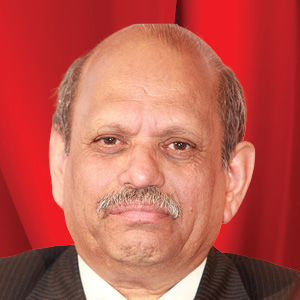
Dr M Govinda Rao
Chairman, Karnataka Regional Imbalances Redressal Committee, and Former Director, NIPFP
Dr. M. Govinda Rao is the Chairman of the Karnataka Regional Imbalances Redressal Committee and a distinguished economist with a long and impactful career in public policy and economic research. He is also the former Director of the National Institute of Public Finance and Policy (NIPFP), where he contributed significantly to the development of fiscal policy and public finance in India. Dr. Rao's expertise spans areas such as economic planning, fiscal decentralization, and regional development. His work has influenced policy decisions related to equitable growth, financial inclusion, and addressing regional imbalances in India.
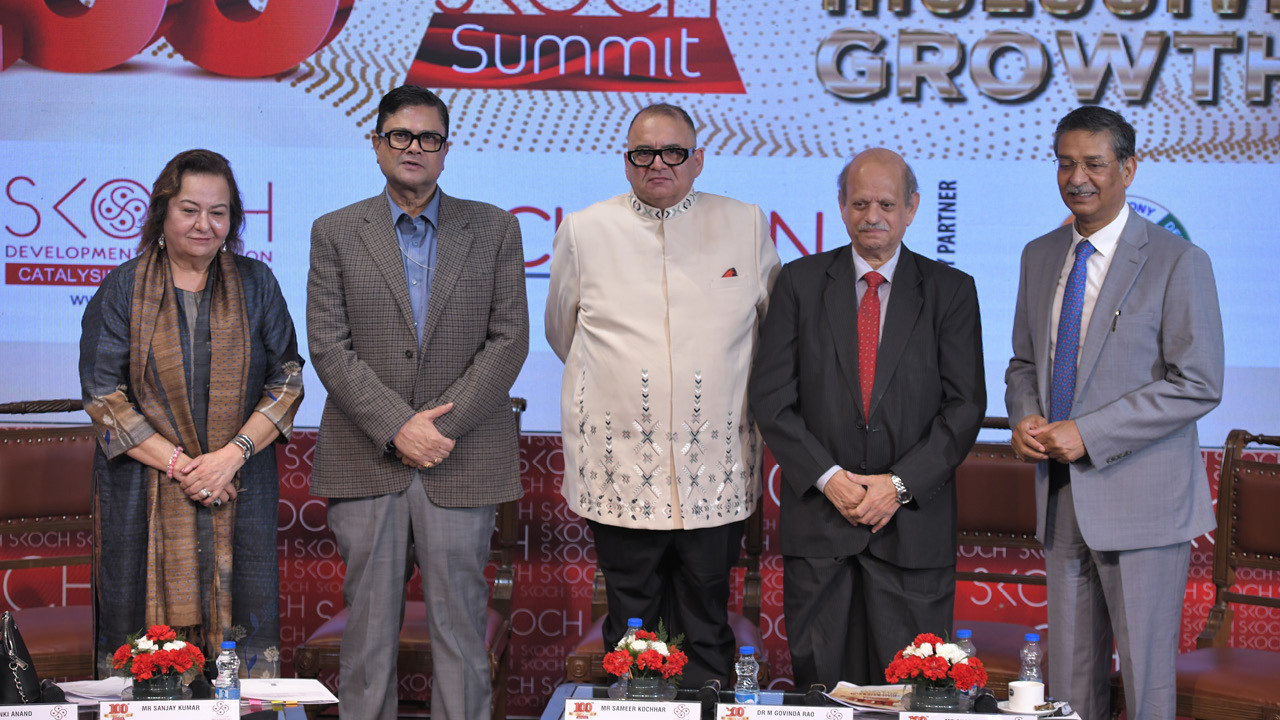
Dr M Govinda Rao at the 100th SKOCH Summit: New Dimensions in Inclusive Growth
Dr M Govinda Rao
Chairman, Karnataka Regional Imbalances Redressal Committee, and Former Director, NIPFP
Key Points*
- Achieving inclusive growth and developed-country status requires sustained high growth and deep fiscal reforms.
- India must expand fiscal space by increasing the tax-to-GDP ratio and improving public expenditure quality.
- Goods and Services Tax is critical for revenue generation but suffers from complexity and misinformation.
- GST needs simplification through a broader base, fewer rates, and reduced rate differentiation.
- Digitization, not mere computerization, is essential for enforcing compliance and improving tax administration.
- Equity should be addressed primarily through government spending on education, healthcare, and skills, not tax distortions.
- High tax rates on key sectors like construction and automobiles hurt employment through broken linkages.
- GST should function as a self-enforcing tax by leveraging data, artificial intelligence, and compliance incentives.
- Thresholds should remain high so administration focuses on large taxpayers while small firms voluntarily comply.
- International best practices show that simpler GST structures deliver higher revenue with lower compliance costs.
* This content is AI generated. It is suggested to read the full transcript for any furthur clarity.
Transcript
Mr. Sameer Kochhar, Dr. Govinda Rao, Mr. Sanjay Kumar, the Secretary, Education, Madam Pinky Anand, distinguished invitees, ladies and gentlemen.
Let me at the outset congratulate Mr. Sameer Kochar on his 100th presentation here—100, you know, summits as he calls them—and I hope there will be many more summits spreading knowledge, education, and information to the public at large. I would also like to compliment Mr. Kochar for the enormous amount of work that he has been carrying out over the years, and I hope he will continue to do that for years together for the benefit of humankind.
I am here to speak about a very difficult subject called the Goods and Services Tax. Nobody likes paying taxes; everybody wants to enjoy public services, but nobody likes to pay taxes. Particularly when it comes to the Goods and Services Tax, there is a lot of misinformation, because there is a general feeling that all indirect taxes are bad, though it has never been proven so.
Let me come to the specific context of what we are going to talk about today. We are talking about inclusive growth—the dimensions of inclusive growth. Why do you want to have growth? We talk about becoming a five-trillion-dollar economy, and by the centenary year of Independence we want to become a developed country. According to the World Bank, a developed country means a per capita income of around $14,000–$25,000. Our per capita income is just about $2,600 now. That means we have to multiply it at least five times, which would require an average growth rate of around 9% per year for the next 23 years.
I will not say this is impossible—China did it—but this is an aspirational goal. To fulfill this aspirational goal, we need a lot more reforms over this crucial 23-year period. A variety of reforms are needed, and since my focus today is fiscal reforms, these are extremely important.
The government will have to continue to be an engine of growth through public spending policies. It has to empower people by improving productivity. When we talk about inclusivity, estimates vary, but almost 6 to 12 million people are entering the workforce every year, and they need employment. About 43–44% of the population is in agriculture, earning just about 15% of GDP. Productivity must improve, and people need to move out of agriculture and into other sectors.
Almost 75% of small and medium industries have fewer than 20 workers. With such small scale, they lack competitiveness, technology, and international viability. Productivity is low, so skills must be created to enable mobility.
When we talk about inclusivity, we must also consider female workforce participation. It was 23.3% in 2017–18 and has gradually improved to around 37%. Women constitute 50% of the population, but the nature and quality of jobs remain an issue. A lot more needs to be done to achieve real inclusivity.
Now let me come to the specific issue of the Goods and Services Tax. The government must continue to spend more, especially on capital expenditure and infrastructure creation. At the same time, we must control the fiscal deficit. Today, the combined fiscal deficit of the Centre and states is around 7.5% of GDP. Household sector savings are just about 5.3% of GDP. There is no fiscal space.
To create fiscal space, we need to increase the tax-to-GDP ratio and reform public spending. Subsidies and transfers must be phased out and redirected toward education, healthcare, skill development, and capital expenditure. Government expenditure is around 28–30% of GDP, and almost half of that goes to subsidies. Spending on healthcare is just 1.2% of GDP, and education is around 3.3%.
If we want to educate our children properly, the tax-to-GDP ratio must increase substantially. India’s tax-to-GDP ratio is around 16.5%, while comparable countries are at 19–20%. Even an increase of 2.5% would make a significant difference.
This is where the Goods and Services Tax becomes important. Globally, about 136 countries have some form of value-added tax. Worldwide, GST is considered a money machine—but only if done right. Digitization is critical. Digitization is not the same as computerization; it is about creating intelligent networks that enforce compliance.
There are two major problems with our GST. First, it needs simplification and expansion. Best practices say a tax system should have a broad base, low rates, minimal differentiation, and be simple and transparent. We do not have that. We have multiple rates—far more than the four commonly mentioned.
Second, there are only three multi-level GST systems in the world—Canada, the European Union, and Brazil—and we are the fourth. GST is essentially a central tax, but in multi-level systems, best practice is zero-rating interstate transactions. We have instead adopted a clearing mechanism through IGST, which increases the burden of digitization.
Therefore, we need simplification: broaden the base, reduce rates, and reduce rate differentials. Equity is often misunderstood. Reducing the incomes of the rich does not automatically increase the incomes of the poor. Equity should be addressed mainly through expenditure—education, healthcare, skill development—not excessive rate differentiation.
Construction materials are taxed at 28%, yet they generate massive employment. Motor cars face nearly 50% taxation, yet they support large downstream industries. We must consider backward and forward linkages.
GST was first recommended in 2000 by an expert group on taxation of services, which I chaired. The GST envisioned then was very different. Ideally, one rate would be best, but politically that may not be possible. At least reduce it to two rates. Misclassification leads to dishonesty, litigation, and inefficiency.
Broadening the base, including petroleum products, completing the GST loop, and keeping thresholds reasonably high are critical. Data shows that 94% of registered dealers have turnover below ₹50 lakh, accounting for only 10% of turnover and 8% of tax. Focus should be on large taxpayers.
GST is a self-enforcing tax that generates massive data. With digitization and artificial intelligence, compliance can be improved. Tax compliance depends on tax rates, probability of detection, and penalties. Lower rates with higher detection improve compliance without burdening people.
While we have a GST Council, each state has its own act, leading to different interpretations across tribunals. Digitization becomes essential to manage such complexity.
Internationally, Canada, the EU, and Brazil represent the good, the bad, and the ugly. Canada allows provinces flexibility. The EU manages well with two rates. Brazil tolerates distortion but has a tax-to-GDP ratio of 36%.
We should aim for fewer rates, better digitization, stronger data use, and efficient administration. As an IMF tax administration expert once said: in developing countries, tax administration is tax policy.
Administration should not burden people. That is possible only through proper digitization.
I think I have spoken too much about GST. Thank you very much for patiently hearing me.