SKOCH Summit
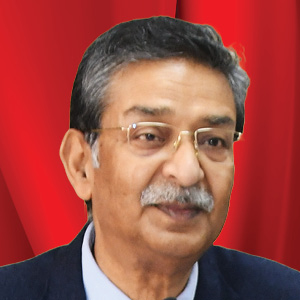
Mr Bharat Lal
Secretary General, National Human Rights Commisison (NHRC)
He earlier served as Secretary to the Lokpal of India and was the founding Mission Director of the Jal Jeevan Mission, a $51 billion initiative to ensure clean tap water for every household by 2024. He has extensive experience in water management, having led reforms in the drinking water and sanitation sectors in Gujarat. He also worked closely with the Prime Minister on managing the COVID-19 pandemic.
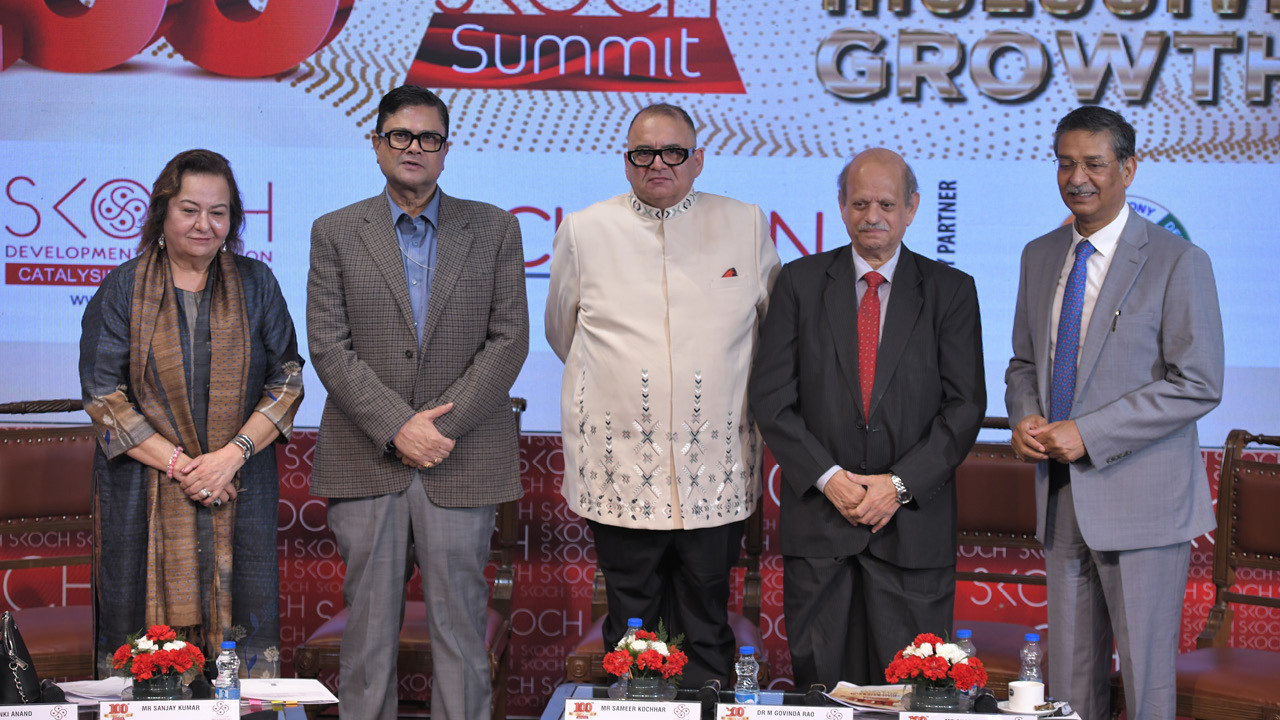
Mr Bharat Lal at the 100th SKOCH Summit: New Dimensions in Inclusive Growth
Mr Bharat Lal
Secretary General, National Human Rights Commisison (NHRC)
Key Points*
- National visions succeed only when individuals and organizations actively play their role in realizing them.
- True leadership and public service are defined by impact, not position, salary, or authority.
- Every organization, especially businesses, must have a meaningful story beyond profit.
- Government should remain lean while creating opportunities and hope for youth through policy and platforms.
- Empowering entrepreneurship builds belief and prevents youth from losing hope in society.
- Human rights, dignity, and inclusion are foundational to sustainable development and enterprise.
- Workplaces must uphold equality, safety, mental health, and respect, especially for women and vulnerable groups.
- Private sector has a responsibility to include marginalized communities, including persons with disabilities and transgender persons.
- Economic growth without values, ethics, and cultural grounding leads to a soulless nation and enterprise.
- Purposeful impact on even one life gives meaning to personal, organizational, and national progress.
* This content is AI generated. It is suggested to read the full transcript for any furthur clarity.
Transcript
Thank you, sir. Good morning everyone. Namaskar.
Professor Rao, my esteemed colleague, the Secretary of Education and Literacy, Mr. Sanjay Kumar, Sameer Kochhar ji, Pinky Anand ji, and dear friends.
It is indeed a privilege to be here in your midst. I was listening to the earlier talks—extremely meaningful—and I was learning a lot. We are all sitting together today to listen, to talk, and to reflect. As Mr. Kumar said, the Hon’ble Prime Minister has given a vision and an imagination. But imagination will remain imagination if we are not ready to play our role. Each one of us has a role to play in that vision.
That is why, in this kind of business meet, I have been invited—to contribute to that larger story, to that imagination, and to think about what all we can do.
First and foremost, let me congratulate Sameer Kochhar ji for reaching this century—not in terms of age, but 100 summits. From my side also, I join everyone in congratulating you and encouraging you to continue this good work.
Friends, let me take a few minutes to point out a few things.
When I see Mr. Sanjay Kumar sitting here as Secretary of Education, what does it mean to me? It means something only if I understand what he is doing and the kind of impact his work is having. Listen to what he was saying—the impact not only on our lives but on future generations. He is devoting his life to making our children’s lives better. That impacts the life of this country.
Every civil servant has a story. People outside may say you are on this chair or that chair, but at the end of the day it is not about salary or facilities. It is about impact—what difference you are making. That is what excites people.
Professor Rao, as you all know, has contributed through the Prime Minister’s Economic Advisory Council and the Finance Commission. He has a story to tell—whether it is GST or other reforms. Pinky Anand ji, whom I had the privilege of working with when she was Additional Solicitor General, has her own story to tell.
The point I am trying to make is that all of us—including you and me—must develop our own story. Businesses too must have a story. A business story cannot just be “I made so much profit.” That does not excite anyone. Profit is important, but that alone does not define you.
My colleague A.B. Singh is sitting here. The story I want to share is very simple. Governments cannot keep growing endlessly. A government that becomes too large creates inefficiency, distortion, and unhealthy practices. Government must be lean, perform critical functions, and create opportunities—not jobs for everyone within government, but opportunities outside.
You must create opportunities for youth and give them belief—belief that this country thinks about them and takes care of them. When youth lose hope, we have seen what happens, whether in Sri Lanka or Bangladesh. In India, policy-making must ensure that youth do not lose hope.
Let me give a simple example. Earlier, when government departments needed supplies, they relied on a few fixed vendors. New entrepreneurs had no entry. A small policy intervention changed this—creating an online government marketplace platform where anyone can register and supply to government departments. Alongside this, schemes like MUDRA provided collateral-free loans.
The story is not just about an e-platform. The story is about empowering youth to become entrepreneurs, to find meaning in their work, and to believe in themselves.
From where I come—the National Human Rights Commission—we also have a story. The story is that if any citizen feels their basic human rights are violated, there is an institution that will listen, intervene, and act. That is the purpose. Creating institutions or enterprises without meaningful impact has no value.
So my request to you is this: develop your organization’s story. Not a story of quarterly profits, but a story of impact.
Think about this—15% of India’s population is affected by mental health issues. Are workplaces contributing to this problem? Are we creating stressful environments where dignity and respect are missing? Is that development?
We studied the Preamble in school—justice, equality, liberty, fraternity—but do we practice it? At workplaces, are women safe, respected, and secure? Are public spaces inclusive? Each one of us has a role here.
Think about Scheduled Tribes—120 million people. Compare development indicators. Are they matching the rest of the population? If not, do we have a role?
Think about persons with disabilities. Think about transgender persons. It is not their fault. Why should their lives be reduced to begging? Why can’t enterprises employ one, two, five, or ten transgender persons? What stops us?
Government has enacted laws like the Transgender Persons Act, 2019. But government should be minimal. Private sector must play its role. Private enterprise cannot exist only to make money. That does not define you.
We have seen tragic cases—excessive workloads leading to death, warehouse workers denied basic dignity. Are we human if such practices exist?
Countries have identities. The United States speaks of opportunity. Singapore has an identity. India too has an identity—not just as a fast-growing economy or the fifth-largest economy, but as a civilization rooted in values, ethics, culture, and compassion.
Without these values, we become soulless enterprises and a soulless nation.
In a family, every member has an equal stake. In this country too, we share equal stake. It is not only about rights; it is also about duties—what our scriptures call *dharma*. Our duties enable others to enjoy their rights.
I will stop here with an appeal. Spend five minutes in solitude. Think about what you are doing, what you are aiming for, and the impact your organization will create. If you can change even one life, your life becomes meaningful.
At the end of the day, when you reach my age, you will ask: did I live a purposeful life? Did I make an impact beyond profit?
Thank you. Have a wonderful day.