SKOCH Summit

Mr Sameer Kochhar
Chairman, SKOCH Group
Reforms historian and author of best-seller ModiNomics, Sameer Kochhar is Chairman, SKOCH Group. He is a passionate advocate of social, digital and financial inclusion and is a foremost expert on governance and inclusive growth. His work has been acclaimed globally and endorsed by Mr Narendra Modi, Mr M Venkaiah Naidu, Dr Manmohan Singh, Mr Arun Jaitley, Mr P Chidambaram, Mr Yashwant Sinha, Dr C Rangarajan and Dr Montek Singh Ahluwalia and so on. In his thinking and writings and activities, his profound admiration for India's economic reforms and in extension, those outstanding personalities who strive to make these reforms more meaningful and broad-based comes out clear and unambiguous.
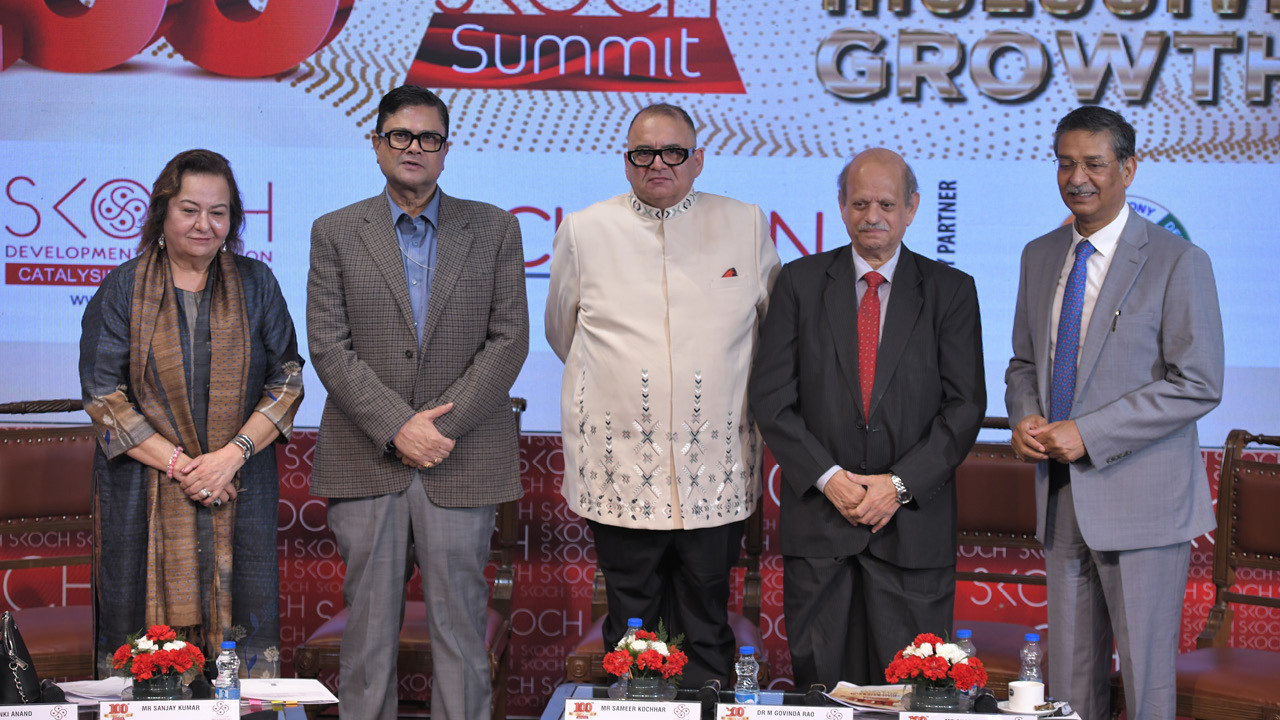
Mr Sameer Kochhar at the 100th SKOCH Summit: New Dimensions in Inclusive Growth
Mr Sameer Kochhar
Chairman, SKOCH Group
Key Points*
- Pre- and post-reform perspective – Contrasts socialist, license-permit India (’70–’90) with post-1991 reforms, framing “many Indias” and continuous transformation.
- Core ethos – Consistency and credibility over partisanship; inclusive growth defined as poverty alleviation—“No Indian Left Behind.”
- SKOCH’s role – Bridge ground realities to policy since 2003 through project-level impact assessments; pushed citizen-centric e-governance and helped the NeGP→Digital India transition.
- Scaling best practices – Identifies, documents, and replicates grassroots tech-enabled governance successes (e.g., Rural e-Seva), not just big-city pilots.
- Reframing employment – Counts self-employment and micro-enterprise in job metrics (MUDRA/SHGs/infrastructure-led livelihoods), challenging narrow “organized jobs only” narratives.
- Challenge to global indices – Critiques cherry-picked/subjective methods (e.g., wired-only internet, opinion polls); proposes Indian-context metrics—SKOCH Reporting Indicators (SRI) with ~1,200 indicators.
- Business climate stance – Warns against vilifying business and policy “cobra effects” (e.g., retrospective taxation, fragmented GST—“One nation, 28 taxes”); calls for tax and compliance reform.
- New lens on inclusion – Growth must be job-generative, spatially dispersed (beyond metros), equitable, and sustainable—“what you can’t measure, you won’t treasure.”
- From Digital India to IndiaAI – Use AI to break program silos, track beneficiary-level outcomes, and speed/service quality; fix institutional memory; prioritize India-relevant use cases.
- Evidence programs & asks – Grassroots audits (e.g., HUL plants), NIFTY-50 benchmarking (strong legal compliance, gaps in mental wellness), “Government Efficiency” rankings (Odisha/UP/AP lead); urges adoption of SRI, support for India-made standards, and collaboration on upcoming research (GST/digital-native compliance, retrospective tax, DPI for AI, digital well-being).
* This content is AI generated. It is suggested to read the full transcript for any furthur clarity.
Transcript
नमस्कार। You have to actually look back to look forward. And you know I was born in the early 60s, तो 70 के दशक की सोशलिज़्म की गरीबी 90 तक फर्स्ट-हैंड देखी है—before pre-reform India, the socialist India, planned-economy kind of India. 70 to 90 I had first-hand experience. I’ve seen the Emergency; I’ve seen so many worst phases India underwent. Then, post-reform India—’91 onward to now—we have seen, and it’s a story of many, many Indias which we have been able to capture, narrate, and probably make a difference to.
Gursharan talked about spine and courage. I think there are two more factors that have defined our work in these more than 25 years: one is consistency and the other is credibility. सरकार बदलने के बाद हम लोग गाना नहीं बदलते—यह एक मिलाज है जो आप बहुत-सी संस्थाओं और लोगों में पाएँगे; हम वो नहीं करते। And why we don’t have to do that is very simple—because we come from the side of the people of India. We are saying inclusive growth means growth that is poverty-alleviating. जब आपका purpose ही life में गरीबी हटाना है, तो किसी भी राजनीतिक दृष्टिकोण से आपकी भिन्नता हो ही नहीं सकती, because कोई power में आ ही नहीं सकता unless their major issue is poverty alleviation.
So, what Gursharan talked about—we have been contributing to building inclusive India, one summit at a time. Everyone thinks government is all-powerful; government has the capability. Problem: government also lacks capacity. Lot of input has to come from outside. There is no defined bridge from felt need at village to the planning table at New Delhi. There is no such mechanism. So SKOCH decided to be the bridge and started traveling across the country—talking to the people, looking at impact assessment of policy (20 years back, 2003), and coming back and telling policymakers: “Sir, यह policy बड़ी अच्छी है, बस दो चीज़ बदल दीजिए। आपने स्कूल खोल दिया है—water नहीं है। आपने IT प्रोग्राम बना दिया माजुली के अंदर—वहाँ बिजली नहीं है।”
We found that whatever stories we were coming back with were making a difference, and all the stories—if you look at from the first summit “Imperative for Inclusive Growth” to the 100th summit “New Dimensions of Inclusive Growth”—have followed a consistent theme: No Indian Left Behind. अगर आप हिंदुस्तानी हैं तो आप साथ चलिए—जितना आगे देश बढ़ेगा, आपको भी उतना ही आगे बढ़ना है।
उस वक्त नई-नई technology आई; Digital India बना. उस वक्त यह comprehension नहीं थी—Digital India और यह e-Governance है—subject किसका है? So, as always, एक मंत्रालय को दे दिया गया. And you know, it was SKOCH that brought to the table that e-Governance basically means citizen-centric governance, and IT is just an overlay; it is not different. Unless and until it percolates down to department, to state, to Panchayati Raj institutions, it would not happen. It took us five–six years of consistent attempts with the policymakers to make this happen. Then it transformed to Digital India (mission project) and so on. Before Digital India there was NeGP—so that transition story at every step we have helped.
The second thing we did was that we looked at early successes. We went to “back and beyond”—nowhere practically in India—and we looked at people who are making a difference using technology as a tool, delivering better governance. When I was doing research for this speech, I came across एक Mr. Sanjay Jaju—he is now Secretary, I&B. He had, as a DC, applied for a SKOCH Award. We have that paper with us—that he had done this Rural e-Seva and what did it change—and he went on to win the award. So those are the kinds of interventions—people जो कहीं बैठे हैं; कोई मणिपुर में, कोई माजुली में, कोई उत्तरकाशी में. We started identification. Replication हो जाती है; किसी का project replicate हो जाता है. But 100 दफ़े ये करके 20 साल में हमने पूरी सहयोग दिया है—चाहे कहीं पर mention हो, चाहे mention न हो.
यह 20 किताबें हैं जो मैंने लिखी हैं, और हर किताब के अंदर—Digital India, Jan-Dhan Yojana, Gramin Sadak Yojana, whatever has changed India for the good—you would find a lot of that has come from whatever I have written. So we have been able to use this knowledge for universal good.
We are the only agency that does impact assessment based on project level. We are not saying, “Most assessments are done कि आपने कितना खर्चा किया, कितना बजट है”—हम outcome की बात 25 साल से कर रहे हैं. And the problem with most global studies is the way they end up mixing things. So if you look at most global indexes like EGDI, Hunger Index, or even sovereign ratings—India’s rating and narrative is universally data-weak. They cherry-pick. Suppose if you say EGDI—one parameter is internet penetration—they’ll pick up wired internet penetration. Everyone knows India is a wireless country—everyone has internet on the mobile. तो आप सारे mobiles को बाहर निकाल दोगे तो बचेगा क्या—105वाँ स्थान आएगा हमारा. So they cherry-pick indicators. For the first time, SKOCH stood up and started questioning: “Common sense के लिए—our indicator लीजिए ना; मोबाइल internet कितना है बताइए.” So that’s the first thing.
The second thing they do is they use opinion-based letters—“What is the state of democracy in India? What is the state of human rights?” After they publish, they use a deflator type questionnaire—कि आपके 10 मित्र हैं दिल्ली में… आम तौर पर एक ecosystem (I have nothing against it)—left-liberal ecosystem. तो अगर आप बता दें कि ये कौन से पाँच लोग हैं जिनसे आपने questionnaire भरवाया था, तो उसका जवाब क्या होगा? मैं खुद ही बता दूँगा—मुझे पढ़ने की भी ज़रूरत नहीं है. So, is there any scientific method in which you have chosen the respondents who are telling you this?
We were looking at another index—Freedom of Press Index. Our score is shown worse than Pakistan and Gaza. तो हमने कहा—ये तो अजीब-सी बात है. Then we asked: “कौन लोग हैं जो public perception में सरकार के खिलाफ सबसे ज़्यादा बोलते हैं?” तो आप Ravish Kumar को ले लीजिए, Barkha Dutt को ले लीजिए—हमने पूरी list बना दी और एक parameter बना दिया कि इनके against कितने ED के case, कितने FIR हैं—कितने हैं?—कितने थे? Zero. इनके ऊपर pressure पड़ा? इनके ऊपर अत्याचार हुआ? मेरे पर भी अत्याचार हुआ; मैंने भी सरकार के खिलाफ बोला; मेरा भी कुछ हुआ—तो मेरे पास recourse क्या था? Court था, FIR था—ये सब हम कर सकते हैं न? इन लोगों ने कितने FIR lodge किए? कितनी दफ़े court में गए? मुझे published data ऐसा कुछ नहीं मिला—हो सकता है किया हो. But अगर आप journalist हैं तो आपके अधिकार एक ordinary citizen से ज़्यादा हैं क्या—justice आपको घर में आकर दिया जाएगा? मुझे क्यों नहीं दिया जाएगा? तो उसकी बात हुई—तो बोलो के “Freedom of Press खतरे में है.” और प्रेस-freedom subject किसका है—state का है या centre का है? So these are the things—you have to question common sense.
It is not that I am talking this to support the current government. I used to talk like this even for the last government. I have said NREGA is a very good scheme (जब लोग बोलते थे कि cash बँट रहा है). I have said PMGSY is a very good scheme. I had said that Swabhiman is a very good scheme. And all of that is documented, and case studies from those days are also documented. So—courage, consistency, and credibility—because whatever we say comes out of knowledge.
This was the report that we came out with on employment. Organized sector in India doesn’t count self-employment as employment. ना America में organized economy यूँ है—there everyone works for Microsoft, Amazon, or some big corporation. In India ऐसा हो सकता है क्या? नहीं. तो जो एक driver है, या किसी का pottery-making unit है, या beauty parlour है, या कपड़े की दुकान है—उसको आप रोजगार क्यों नहीं मानते? ना उसको रोजगार माना जाता है, ना गिना जाता है. तो ये सब हमने गिन के बता दिया कि कितने रोजगार हुए—out of the new schemes—MUDRA Yojana, Jan-Dhan Yojana, SHG formation; इतना सारा infrastructure पे spending हुआ जो पहले नहीं हुआ था—उसमें कितने percentage jobs create हुए. तो ये report हमने निकाली.
I am not saying this is to snatch credit, but: अगर आप graph करेंगे phase-1 से phase-5 तक NDA की seats—phase-3 में बहुत ज़ोर का “unemployment issue”—phase-5 तक seats कितनी रह गईं. Phase-5 में हमारी report निकली कि कितनी नौकरी आई. उस हफ्ते कुछ नहीं हुआ—सिर्फ हमारी report पर वार्तालाप हुआ—चाहे सरकार ने, CMs ने, cabinet ने, media ने, opposition ने—16 seats ऊपर चले गए.
इसी तरीके से एक business की बेइज़्ज़ती करने का हमें शौक है—पुराना Bollywood “रोटी, कपड़ा, मकान” जमाने से: businessman है तो चोर है. पहले Tata-Birla को चोर बोलते थे; अब Adani-Ambani को. अरे भैया—जिसकी दिहाड़ी से, रोज़ी-रोटी कमा के दे रहे—जितनी employment है देश में, mostly इन लोगों ने बनाई है. So जब तक हम respect for doing business नहीं करेंगे—“mob-lynching” of business से नहीं निकलेंगे—I think making business a part of political dialogue, not extreme sin. Due process should be followed—लेकिन अगर किसी के share prices ₹2 लाख करोड़ नीचे डूब गए—किसके डूबे? वो आपके और हमारे थे न? उनकी expansion रुक गई—जो 2–4 लाख नौकरी और देनी थी, वो नहीं दी. नुकसान किसका? उनका? उनके पास तो है; खाना तो तीन दफ़ा ही खाएंगे. पर जिसकी नौकरी नहीं लगी, वो कहाँ से खाएगा? आपने बोल दिया businessman चोर है—और जब due process होगी और कुछ नहीं निकलेगा—तो जिसकी नौकरी गई थी, जिसका stock market में पैसा डूबा था—उसकी भरपाई कौन करेगा? Responsibility भी तो लेनी चाहिए.
So we started saying: businessman अच्छा है कि नहीं—उसके indices क्या हैं—मापदंड क्या हैं? We made 1,200 indicators जो दुनिया भर में मान्य हैं. India में ऐसी research नहीं होती. आज भी हम एक report निकाल रहे हैं—Human Rights in Business. India में human rights बड़े खराब हैं—ऐसी बात है? तो हमारा Indian business human rights से कैसे compare करता है—Tata, Birla to Ambani-Adani.
जैसा कहा—“अगर आप rich हैं, you are guilty”—ये jealousy है या fact? इसी तरीके से एक cobra effect India में होता रहता है: जब economy अच्छा कर रही होती है, तो हम लोग खुद ही अपने पैर पर गोली मार लेते हैं—Vodafone के time पर हुआ था; Cairn के time पर; तब सरकार दूसरी थी. अब ये digital gaming में हो रहा है—जितनी उनकी turnover नहीं है, लाखों करोड़ का retrospective tax लगा दिया—कि हमारी समझ से ये tax ये था. तो भाई, वो कम tax जमा कर रहे थे—10 साल का notice भेज दिया. आप accept भी कर रहे थे—जिसने accept किया, उसकी क्या remedy? आप ही के अफ़सर थे जो accept कर रहे थे—तो वह commissioner जिसने tax कम लिया—भरपाई उससे करवाईए. क्योंकि जिसने tax कम दिया, उसने तो जनता से charge ही नहीं किया—GST end-user का tax है—service provider बेचारा कहाँ से लाएगा?
Short—GST को हम “One Nation, One Tax” बोलते हैं—actually One Nation, 28 Taxes. हर state का अपना GST law है. अगर centre से notice आता है तो 28 states से और notices आ जाते हैं. So we need tax reform.
Coming to new dimensions in inclusive growth: हमारी परिभाषा digital-social-financial से शुरू हुई थी. आज देश की स्थिति में हम बात कर रहे हैं growth that is job-generative—सबसे बड़ी ज़रूरत रोजगार की है; spatial dispersal की है. जैसे अगर आप हरियाणा से Gurgaon, Faridabad, Chandigarh निकाल दीजिए—क्या बचता है? पंजाब से Chandigarh, Ludhiana, Amritsar निकाल दीजिए—क्या बचता है? Bangalore निकाल दीजिए—Karnataka में क्या बचता है? So “No Indian Left Behind”—metros में कितने Indians हैं—and how many are outside metros? Are we going to be a first-world country only in metros? What happens to people outside the metro? So spatial dispersal is very important; equity very important; sustainability extremely important. These are the new dimensions we added. We are now defining parameters—“what you cannot measure you won’t treasure, and what you treasure you must measure.”
So—e-Governance measure करने के लिए—आप World Bank का index लेते हैं; human rights—V-Dem; governance/corporate sector—GRI. ये भी तो NGOs हैं, private संस्थान हैं, think tanks हैं—सरकार तो नहीं हैं. तो एक Indian think tank क्यों नहीं बना सकता? We built indicators—SKOCH Reporting Indicators (SRI). We picked up all these areas and developed them at sub-head, sub-sub-head level, and हमने NIFTY-50 companies की baseline study कर ली—आज कहाँ हैं. Moving forward we will be releasing it.
मज़े की बात: EGDI का जो बताया—मैंने निकाला कि हमारी sovereign rating ये होनी चाहिए, EGDI की ये होनी चाहिए—तो उसमें आया कि top-10 economies में India number 2, e-Governance में number 1 China है. अभी 15 दिन पहले EUIR की report आई—उन्होंने बोला India number 3; number 1 US है. मुझे लगता है US number 1 नहीं—बोलने के लिए बहुत हिम्मत चाहिए—वो हमने बोल दिया—number 1 नहीं—number 10 है. But 2 और 3 में कितना फ़र्क है? आप तो बोल रहे 105; हम बोल रहे 2; वो बोल रहा 3; आप बोल रहे 105. So—आइए मुकाबला करिए—data बताइए—wireless कितना चलता है. US की e-governance documentation ढूँढ लो—online मिलेगी नहीं—US has PDF governance—no e-governance; they only have papers and PDFs.
We started in India 207 Centres of Excellence doing three things—research, proof-of-concept, and best practices research. We have done numerous indices. We are releasing, very shortly (as part of the 100th Summit celebration), SKOCH Reporting Indicators—and आपकी मदद चाहिए as Indians—इनको promote कीजिए—ये Indian standards हैं and a superset of global standards.
सरकार में भी—कई लोग कहेंगे: “ये KPMG का नहीं है, ये NASSCOM का नहीं है, ये UN का नहीं है, ये WEF का नहीं है.” वो सारे आपके भाई-बहन हैं क्या? और जितनी वो बातें बता रहे—20 साल से ज़िल्लत दे रहे—तो और ज़लील होना है? Use them. और अगर आपको सही अपनी बतानी है—हम कोई data तो नहीं forge कर रहे—indicator हमने बता दिए; published data है; study हो रही; indicator vs indicator—लड़ाई है—Global South vs Lower North की लड़ाई.
Similarly, we opened a Research Centre for AI. I was studying—जैसे Digital India में contribute किया—IndiaAI में भी कोशिश कर रहे. मैंने देखा—सरकार के अंदर institutional memory नहीं होती—even people in the same ministry don’t remember what happened 20–30 years back. The institutional memory of how Digital India was built has been completely lost—even in MeitY. Digital India is about e-Governance, not just technology. IndiaAI भी वहीं से शुरू हुआ—LLMs, GPUs… If you look at GoI’s IndiaAI policy—it does not mention the word Digital India even once.
20 years—thousands of crores—mission-mode projects, delivering e-Governance, bringing transformation. The first place there is a crying need for IndiaAI is in making Digital India deliver faster, better, and higher value. It can help break silos—MoRD एक beneficiary के पास जा रही है; MoPR भी उसी के पास; Gram Yojana, Ujjwala—सब उसी beneficiary के पास. Beneficiary की life में क्या बदला—AI track कर सकती है—क्या information meaningful है या नहीं. So one focus area we’ve picked: From Digital India to IndiaAI—IndiaAI नई चीज़ नहीं—continuation of Digital India. Second—we are working on use-cases—which are relevant for India, which help you govern and deliver better.
Digital indices में—UN बोलता है हमारी rank 2 है; HDR में 134; हमारे indicator पर 10; Hunger में 111; हमारे indicator पर 9. Indicators क्या हैं—this is not voodoo—1,200 indicators—anyone can look and question.
We took this work to government—great, but governance system—there is nothing called “Ministry of Indices.” Who will do/fund this? Top-10 we did—free. 193 countries—कहाँ से करेंगे? Number of researchers, documents, access. So we realized—this like building Notion—हमारे बस की नहीं. We have demonstrated how to answer; if you want it answered, give some grant to SKOCH Foundation so we can employ people. Or—use our parameters—किसी और से research कराइए—parameters defined.
Now we are focusing on what no other country is doing—grass-root impact assessment in India—project-level findings. Published work may say human rights बड़े अच्छे हैं—but आता-आते Lala-ji थप्पड़ मार देते हैं—एक public sector bank ने driver को मारा था (CMD ने)—news. So then what human rights?
People say private sector exploitative है—ये नहीं देखते कि हमारी अपनी company में—full salary लेकर—2 घंटे हमारा काम—6 घंटे freelancing—घर जाकर भी. Balance कहीं तो कीजिएगा. हर चीज़ के दो पहलू होते हैं. So we want to bring these things to the table. When you say over-worked—let me also understand your productivity. We have one of the least productive man-hours—are they inefficient? No—using only 20% for the people paying them, 80% freelancing—fact of life—more so in IT. How will we correct this? These are the indicators.
Corporate rights—one area no one is talking about—mental wellness. कोई suicide क्यों करता है? बच्चे/हम सारा दिन phone से क्यों चिपके रहते? Conference में बैठे—आधा घंटा बाद itching—phone देख लो. What method are we following?
Method we follow: quantitation (published sources)—जो आप published बोलते हैं, हम भी—but हमने उसे more comprehensive किया. आप wired internet गिनते—हमने wireless भी गिना—so superset. Then project-level findings—जो हम 20 साल से कर रहे—factory-to-factory. उदाहरण—evaluated 20 factories of HUL last year—environmental areas, quantified.
अब हमारी Government Efficiency report—15 February को release—क्योंकि हमारे पास 20 साल का data है—input और outcomes—एक table में डालना. State-level—State of Governance—जो हम 20 साल से कर रहे हैं—EGDI (SKOCH parameters). Who is the most efficient government? Not the one spending the most—the one doing the most by spending the least. Per this, in India: #1 Odisha, #2 Uttar Pradesh, #3 Andhra Pradesh. Normally leading Karnataka—#11; Bihar #9.
इसी तरीके से हमने Credit Outreach Gap, Social Inclusion—100 जितने global indices—सारे Indian alternatives बना दिए. Digital Gaming—जिसको लाखों करोड़ का retrospective taxation का unfair notice—उसमें compliance क्या है.
अब Human Rights in Business—NIFTY-50—6 महीने में evolved indicators—दुनिया में सिर्फ एक ही indicator set (WEF) exists—वो पूरे ले लिए; UNGPs (guiding principles)—ले लिए; I&B Ministry, NHRC, NIMHANS, AIIMS, industry associations—सभी से consultation—तब indicators बने. Two types—rights-based (codified in law) और voluntary (India में अभी law नहीं—आएँगे—mental wellness बड़ा issue).
NIFTY-50—technical compliance (SEBI, stock exchange, MCA filings) और quality of compliance (economists/lawyers read, opined). Phase-1—quant; still not qualitative. Rights-based indicators—we are doing extremely well: industry average ~78.6% on technical; 75.9% on quality. But it becomes half on mental wellness—क्योंकि कुछ हो ही नहीं रहा. Benchmark: Top-20 of Fortune-500—on technical compliance India ahead; Indian companies far more compliant than top-20 F-500. India’s score pulled down by mental-wellness indicators; even after that, as an average, we are in the same ballpark—so you cannot say India is worse/better—data and evidence—debate open.
यह NIFTY companies on Corporate Digital Responsibility—how responsible you are towards consumers. Corporate excellence—digital transformation, environmental, social, governance—human rights sub-indicators—सबके नीचे sub-sub-indicators—इतना सारा काम—अपने बलबूते—अपनी funding से—zero external funding. Consumer of this research—probably entire India as a global leader.
Some projects we are working on: Federal GST & Digital-Native Compliance—India take the leadership; Retrospective Taxation (paper led by Dr. M. Govinda Rao); From Digital India to IndiaAI; Advancing India’s DPI for an AI-enabled Future (working with Abhishek Singh ji and Abhishek Nandan ji); Regulating for New Digital Economy; and Human Rights & Digital Well-Being in Business. This is ethics policy—ना घूस देते हैं, ना लेते—basically this.
Thank you very much. जो भी प्रश्न हों—तरक्की के लिए आशीर्वाद चाहिए और promotion चाहिए. अब—हमने बड़ा पैसा, बड़ा effort करके SRI निकाले—please use कीजिए—और हमारी मदद कीजिए—आपका अच्छा काम पूरी दुनिया को दिखाने में. That’s the only ask. Otherwise, little-poor, no money—but can give a lot of cooperation. बस—thank you so much, Mr. Kochhar.