SKOCH Summit
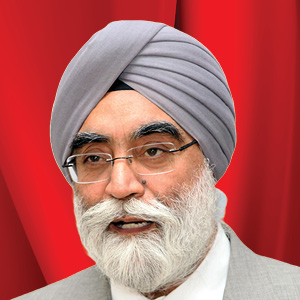
Prof Charan Singh
Distinguished Fellow, SKOCH Development Foundation
Prof (Dr.) Charan Singh is Distinguished Fellow, SKOCH Development Foundation. He is CEO and Founder Director, EGROW Foundation. He was Non-Executive Chairman of Punjab & Sind Bank. Earlier and was the RBI Chair Professor of Economics at the Indian Institute of Management Bangalore, India; Senior Economist at the IMF, Washington DC; and Research Director (Economic Policy, Debt Management) at the RBI.
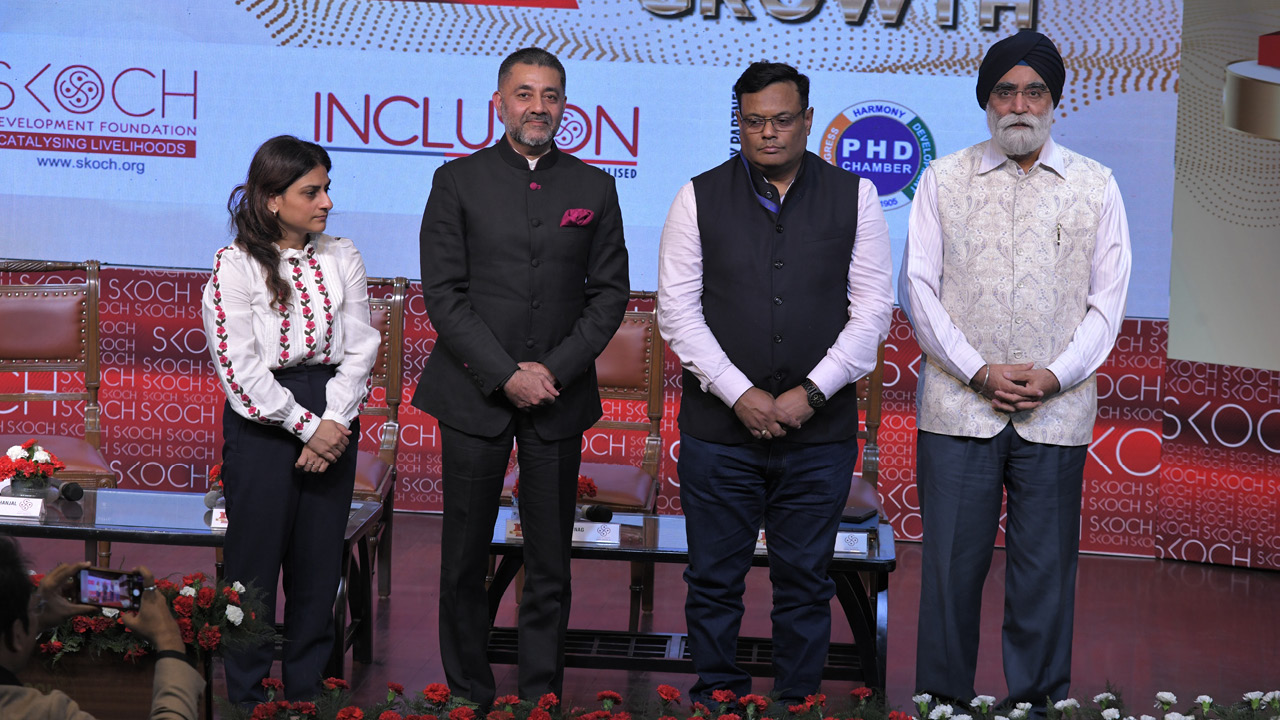
Prof Charan Singh at the 100th SKOCH Summit: New Dimensions in Inclusive Growth
Prof Charan Singh
Distinguished Fellow, SKOCH Development Foundation
Key Points*
- The panel discussion focuses on planning and policy for India’s digital economy and inclusive growth.
- India’s financial inclusion journey spans decades, but mission-mode efforts since 2014 drove near-universal account ownership.
- The JAM trinity—especially mobile penetration—enabled rapid expansion of banking access and digital transactions.
- Digital India, Make in India, and Startup India, supported by telecom expansion and 4G/5G, are core to the digital economy.
- Digital adoption has reached beyond metros into smaller towns, transforming payments, commerce, and daily services.
- The digital economy brings major opportunities but raises risks around privacy, data protection, and cybersecurity.
- Regulation must balance innovation with a level playing field, preventing exclusion of weaker segments.
- Digital traces enable oversight and taxation but can also create discrimination and commercial risks.
- AI will reshape sectors like education, health, policing, and defense, requiring skilling and careful adoption speed.
- Bhashini demonstrates inclusive AI potential by bridging language, literacy, and digital divides through voice-first services.
* This content is AI generated. It is suggested to read the full transcript for any furthur clarity.
Transcript
The next segment of awards—for ladies and gentlemen—we are quite excited to announce our next panel discussion, which would be on planning and policy for a digital economy. With this, ladies and gentlemen, allow me to introduce our esteemed panelists for this panel discussion.
May I please now invite Professor Charan Singh, co-founder, AGRO, and Distinguished Fellow, SKOCH Foundation, to be on the stage. We welcome you. Thank you so much for joining us today. Ladies and gentlemen, he’s a SKOCH awardee. His academic contributions include teaching macroeconomics, monetary policy, and global economics at institutions such as IIM Visakhapatnam and IIM Rohtak. Professor Singh’s extensive career encompasses roles such as RBI Chair Professor of Economics at IIM Bangalore, Senior Economist at the International Monetary Fund in Washington DC, and Research Director at the Reserve Bank of India. We welcome you. Thank you so much for joining us.
With this, may I please now invite Mr. Amitabh Nag, CEO, Digital India Bhashini Division, MeitY, to kindly join us on the stage. Ladies and gentlemen, let’s put our hands together for sir. Ladies and gentlemen, Bhashini aims to bridge linguistic barriers across India by leveraging artificial intelligence and natural language processing technologies. Under his able leadership, Bhashini has developed capabilities such as text-to-text translation in 22 scheduled Indian languages, automated speech recognition, text-to-speech synthesis, and optical character recognition. Sir, we welcome you.
With this, may I please now invite Professor Sonali Tandon, Associate Professor, National Institute of Public Finance and Policy. Ma’am, we welcome you on the stage. Dr. Sonali Tandon is an Associate Professor at the National Institute of Public Finance and Policy specializing in direct and international taxation, sustainable finance, financial markets, and climate finance. She has contributed extensively to tax policy research, and her expertise informs policy discussions on taxation and sustainable finance. Ma’am, we welcome you.
With this, I also request Dr. Gursharan Dhanjal, Vice Chairman, SKOCH, to kindly join the panel as moderator, and also request him to begin with his introductory remarks.
Welcome to this post-lunch session. I know it’s always a challenge after a sumptuous lunch and the beautiful lunch that was served outside to stay awake. It’s also a challenge for the panelists to ensure that what they want to say you’re able to listen, because generally post-lunch sessions one could be dozing off at times. At Bangalore, where I was the RBI Chair, I used to tell the students: it’s your duty to keep me awake. If I sleep off, you can all have a day off, but it’s your duty to keep me awake. So the students would ask me 100 questions in the post-lunch session.
So I’m sure you will enjoy this discussion on inclusive growth and the digital world. This is an absolutely fantastic topic—something which is extremely important to all of us, you would agree with me, I’m sure, on that. And to discuss this topic, while I’m going to be chairing this panel discussion, I’ll be making some initial remarks, and then we have a very illustrious set of panelists with me, including Dr. Dangel, who’s the Vice Chair of SKOCH.
Let me first formally thank SKOCH for organizing this important 100th SKOCH Summit. That shows how much they have been into policy making and contributing to Indian policy making. I’ve known them for more than 10 years. They are doing this regularly and in different parts of the country. You have also noticed the way they do their analysis and evaluations, and then they put it on record by awarding people who are doing exceedingly well.
I also want to thank SKOCH for not only organizing this important event but inviting me and my co-panelists to join here.
I would like to discuss and begin with the standard, familiar concept of financial inclusion that has revolutionized Indian banking. I will take a minute to introduce you to what financial inclusion was. I’m happy to share that we had been thinking in our country of serving the poor and the unbanked for more than 100 years.
Many commercial banks set up in India, including Punjab and Sind Bank—which I chaired for five years—were set up with a single objective of ensuring that we are able to reach the unbanked population of our country. Many banks have done the same. The cooperative movement that started in 1903 in our country also followed the same. In 1947 when we got our independence, we nationalized State Bank of India in 1955—same objective: reach the unbanked. We were not able to achieve it significantly.
So in 1969 we nationalized our commercial banks—same objective. In 1980 we did another round of nationalization in which a bank like mine, Punjab and Sind Bank, was also nationalized. Despite this objective of reaching the unbanked, much could not be achieved.
So much so, when I was in the Reserve Bank and undertook a study on financial inclusion, by 2008—that is nearly 28 years after the second round of nationalization of commercial banks—we were surprised to see not even 50% of the Indian population had a bank account.
It is in 2014 when the Prime Minister went for financial inclusion on a mission mode—and we know what happened then—55 crore Indians, you can call them subprime or you can call them unbanked, joined the formal system.
How did this revolution take place? Today we are able to say that at least 97% of Indian households—somebody has a bank account. How did we achieve this? Through the digital revolution, which we all know: the JAM trinity. Jan Dhan came in, but most importantly, the phone came in.
This digital revolution happened at such a rapid pace and is familiar to all of us. But the digital revolution is much more than simply the JAM trinity and opening of bank accounts. Let me enumerate a few things.
Digital India, Make in India, Startup India—these are a significant and integral part of the digital economy. The National Digital Communications Policy of 2018 further supported this growth by advancing digital infrastructure and expanding broadband access.
Today there are over 65 crore smartphone users in our country, and subscribers are nearly 95 crore. We are a population of about 140 crore—just imagine where the digital world has taken us and how fast it’s expanding. The telecom sector is evolving with the expansion of 4G and the ongoing rollout of 5G networks.
India’s digital economy boasts major players like Indian IT giants—Infosys, Tata Consultancy, Wipro—and alongside them US companies such as Microsoft, Oracle, IBM, Google, and Amazon. In most of these companies, it is the Indian mind which is working, even if they are international US-based companies.
There are various issues involved when we speak about the digital economy. There are issues of regulatory—and I think part of it is going to be covered by Professor Tandon. There are digital trade barriers, which is a challenge and one has to prepare for it.
But the digital economy provides unparalleled opportunities—cross-sector, cross-country opportunities which are becoming available now across our country. Not only that, because of the digital revolution, we in India are able to reach far and wide, even in the hinterlands—places which we had never thought about. Most of us live in metropolitans, and we know in the metropolitans the penetration of internet banking—if nothing else—of BHIM payment and UPI is intense. But even in smaller towns, if you go, the situation is the same to a great extent.
I must share this example with you. When I was at IIM Bangalore as RBI Chair Professor in Karnataka, a study had been conducted blaming the smartphone for children not concentrating on their studies and also indulging in antisocial activities. Just three days back, I was in a university in Hisar and the faculty over there was telling me exactly the same thing: “Sir, in our class students are indulging in too much online gaming and their concentration from academics is not there.” There are pitfalls of these digital footprints.
On one hand you find the poorest of the poor—even a small tailor availing a Mudra loan, or not even availing Mudra loan—small amounts of loans, are able to conduct their business through UPI payment and are excited about it. I’m sure you would have witnessed going in an Ola or Uber car—the driver will tell you: “I don’t need cash. I don’t have the change to give you. Here is my QR—please focus on this and make me the payment.” It’s so exciting to see in a country like ours: people who cannot speak in English, who cannot communicate, but when it comes to internet banking or UPI, they’re absolutely aware of it and they’re taking advantage of it. That is so exciting for a policymaker.
The digital economy is making progress. We have seen its application roll out in front of our eyes in 10 years. E-commerce is something we are all familiar with. Most of the books that you and I buy are through Amazon. We know how, through Swiggy, we can order anything anytime—and within 10 minutes, even before we blink, the parcel is with us.
Within our country, there are places and states like Telangana, Karnataka, Maharashtra, Gujarat, even Haryana, where digital footprints are becoming very strong. This is something to be proud of.
Along with this digital progress, there is a worry of data protection and privacy. In my assignment at the IMF from 2009 to 2012, I heard young minds telling me: before the husband comes to know, we will know that the wife is on the family way—that sharp intervention they can make, just the moment the doctor prescribes a test and the test is positive. How about data protection and privacy?
I’m not surprised that even in the banking sector today, as you make a call to the call center, your number, the reason for your query, and the answers that you’re seeking would flash in front of the call center employee to guide him: this is the person, this is the issue, most probably this person is going to ask you—here are responses you can give. AI is moving so sharply.
Yes, internet and mobile penetration is exceedingly well on the way, but as I mentioned, there are challenges too. Money is getting transferred in a flash of a second—at the speed of an electron—and in case there is an error and amounts are large, you can imagine the challenges it poses. While e-commerce is growing, how satisfactory would it be for the manufacturer, for the trader, and for the consumer?
Then there are issues of taxation and regulation. How much would you like to regulate online gaming? Online gaming on one hand is helping you create innovation, but on the other hand could be tempting you into online gambling.
How about the existing infrastructure? For example, the education system—once AI sets in, what happens to the education system? Would I like to listen to a professor standing in front of me, or would I like to listen to a professor from Harvard or Stanford who would be giving lectures, getting them recorded, and putting them online—and at the end of the day the exams will be similar? While there is going to be convergence of knowledge and qualitative improvement across the globe, there are going to be issues.
Similarly on health issues: while online health facilities would be available, how much can we tap on them? How much should we tap on them?
Similar is the story of banking: would we need brick-and-mortar branches, or would people be satisfied with internet banking? In our analysis, and you’ll be surprised, in countries like Australia where I have worked, there is a segment of the population which looks forward to going to the physical branch and talking to the counter clerk because they have no one else to take care of them and no one else to talk to.
So there’s going to be revolutionary change in e-commerce and the digital economy. We have to think in terms of both the demand side and the supply side. On the demand side, I’ve mentioned issues of data protection and privacy. On the supply side, we have to be careful about a level playing field and how regulation can be effective so that in this sharply innovative area there is a level playing field for everybody.
We will have to think in terms of strengthening the data protection framework. We will also have to think through this digital revolution: whenever innovations take place, the past record shows some segment of society—generally the creamy segment—benefits. While I started from the JAM trinity insisting that in our country we have been reasonably inclusive of the benefits of the digital economy, one will have to guard that the downtrodden are not left behind.
There is always a payoff between regulation and innovation. How much should we regulate? How much creativity should we allow so that creativity and innovation does not suffer because of regulation? That is a challenge, and one has to think through it.
We also need to build cyber security capabilities. I’m sure everybody sitting in this room has had some bad experience with cyber security or digital banking. We have been able to resolve it, many times it takes a long time to resolve. One has to think through this.
The last point I want to make—and elaboration will be made by Professor Tandon—is the issue of taxation in the digital world. The moment you enter the digital world, you leave a transaction trace. Whatever it be—financial transaction or any other transaction—there is a trace available for investigating and evaluative agencies to know who is doing what. In our country that is very useful, but it can also be detrimental to commerce. Who is selling me the product? Do I want to buy the product from this shop or from this person? It can be discriminatory. One has to think through the digital revolution and where we are, and also the role of artificial intelligence in our private life and in our country.
Let me conclude by sharing my interaction with Michael Spence, the Nobel Laureate, who pioneered the application of AI across the world. When I spoke to Michael Spence about its application to India, and the implications it can have—especially for a country like India where one crore people enter the workforce—AI may change how we work. Drones may be needed more than fighter planes; soldiers may be needed less; cameras may do jobs where policemen on the street may not be needed.
What do we do? Michael Spence was clear: you will have to take your own decisions as to what speed AI takes over your economy, and how much time you want to give to AI to take over these activities.
So we will have to follow the digital world and the digital economy with great respect and also with great caution.
With that, I will invite Mr. Amitabh to share his thoughts.
[Applause]
Welcome. Your project and the way you mentioned it in the five dimensions is extremely useful for us. Many of us who have been in the system for a long time have seen translations taking place, sometimes very literally—translations used to create havoc. I’ve seen it in the Reserve Bank while translating statutory reports, and when SMS messages have to go from commercial banks to customers. But now through Bhashini, the way you’ve mentioned it is so reassuring that we are technologically on a very sound footing.
With that, let me move on to Professor Tandon. Now she is going to speak to us on taxation and aspects of regulation.
Professor Tandon.
Thank you. Happy to say that we are on track in terms of the conversion models on all areas, except a few areas of text-to-speech, which we are working on. These are the five problems we solved, and how did we solve it? At the time when the mission started, artificial intelligence was still in labs. So we collaborated with about 70 research institutes and asked them to form about eight consortiums. Each consortium was given a problem statement, and models were created and passed on.
Then the question was: how do these models render as a service? There is an API platform created called the National Hub for Language Technology, which renders this as a service. The AI models are converted into services through APIs and rendered as a service. This National Hub for Language Technology, or NLT, is hosting these 300-plus models as service APIs on its platform.
Today, NLT has approximately 300 customers, and the system is inferenced about 6 million times a day—60 lakhs times a day—for various services: automatic speech recognition, text-to-text, text-to-speech, and other things.
One more issue we realized when we were developing these AI models was that only 6 to 7 languages had enough digital data available to train the models. For the rest, the data had to be created from the field through a unique exercise. We went to the field with handheld devices, with pictures on the mobile, and asked people to speak about them. When they spoke, we captured the speech and the text as a parallel corpus.
Having done this activity, we are now in a position to serve 300 customers across 6 million inferences per day.
The crux of this is: what are we looking at? There are parallel initiatives by private organizations and multinational corporations. The mission was announced with an intent and carried forward with five basic objectives.
First: no language should be left behind. That is why we cover 22 languages. When we announced 22, others said they will do 100, which is good for the country, and we would like market forces to move forward.
Second: although it is an AI system, we are aiming for 100% accuracy, which depends on how much data we collect and how much training we provide to the model. This is an ongoing journey.
Third: voice-first. Voice-first helps transcend the language divide, bridge the digital divide, and bridge the literacy divide.
Fourth: focus on use cases and transactions that impact everyday life. If I’m reading a book in my language, I should be able to apply for a scholarship in my language, without shifting to English. If you want to learn English, learn—but language should not become a barrier.
We want to be pervasive and ensure that no person feels they must learn another language or be doomed.
Fifth: the technology should be affordable. As a government mission, we want this technology to be open and available. We also want safe and trusted AI: models are open-sourced, datasets are open-sourced, so social audit is possible.
Language is a large use case of AI. This system is currently being used and is constantly evolving. I will stop here; in the next round I will give examples of use cases—how we are transcending the language divide, digital divide, literacy divide, and increasing productivity.
Thank you.
Thank you so much for giving us all the details about how Bhashini will work in digital activities and the revolution taking place.
As economists and statisticians, there is no consensus on how to define the digital economy. If you look at the OECD definition, you will find various versions. The closest answer I can give is the OECD definition I summarized.
I totally agree—there will be job displacement or job reorientation. If there is job reorientation, we have to be ready with skilling so displaced people can move from one sector to another. That is a herculean task in a country with 100 languages, different topographies, and different contributors to GDP.
Now that we have started thinking about it—and thanks to SKOCH for bringing up this issue—we will have to find a way out. The only distinction in India is that nowhere in the world is the population booming like in India. Artificial intelligence was spearheaded in places where there was no population to work, and therefore innovations like driverless cars emerged.
I was in Germany about 10 years ago, and they were telling me: we don’t have people to run our trains. I said: in India we have all types of trains—from steam engines to the most modern locomotives—so why don’t you take our people? They said: migration issues get involved, but we don’t have people to run our trains.
Those are the countries innovating in AI. My understanding is: like in a family, the child’s requirements are different from the parent’s, which are different from the grandparent’s. In an economy, the gardener’s requirements differ from a technologist’s. Similarly, different economies face different challenges, and these innovations have to be adapted and adopted carefully.
With this, I do not know—Dr. Dangel, do you want us to wind up? Okay.
With this, that makes my job easier. I don’t have to face questions from the audience. I thank you all for your patience. I want to thank the panelists again, and I want to thank SKOCH. It’s a very celebratory occasion—the 100th Summit. Congratulations to you. Thank you.
Thank you everyone for being part of this incredible session. Let’s keep the momentum going as we continue to explore the limitless possibilities. Once again, we thank all our esteemed panelists who are present on the stage for their wonderful insights. Thank you so much, sir.