SKOCH Summit

Mr Tanmay Bhargav
CTO and Head - TechSales, Hitachi Vantara, India and SAARC-Region
He has over 22 years of experience in forensics, banking and financial services and project finance, both within and outside India. He has led/ participated in several large and complex engagements involving financial crime investigations, bribery and corruption cases and fraud risk management. He brings with him experience of dealing with regulators and law enforcement agencies.
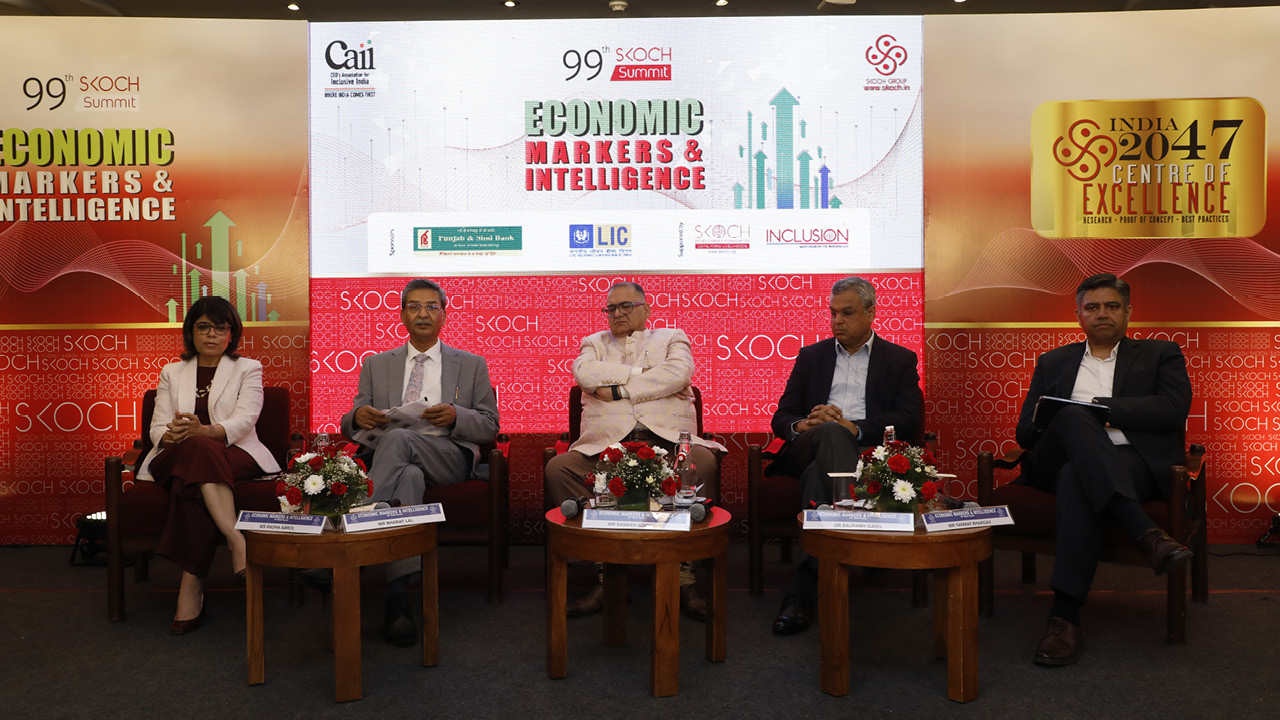
Mr Tanmay Bhargav at the 99th SKOCH Summit: Economic Markers & Intelligence
Mr Tanmay Bhargav
CTO and Head - TechSales, Hitachi Vantara, India and SAARC-Region
Key Points*
- Digital gaming will be a significant contributor to India’s USD 30 trillion digital economy.
- Digital gaming involves real-money transactions across apps, platforms, and virtual assets.
- Cryptocurrencies and virtual assets are decentralized, anonymous, and difficult to trace.
- Blockchain-based assets pose serious anti-money laundering and KYC challenges.
- NFTs, gaming tokens, skins, loot boxes, and metaverse assets can be monetized and traded.
- Gaming platforms can be misused to convert illegal funds into legitimate income.
- Microtransactions and dark web activity make detection of illicit flows difficult.
- Multiple regulators in India oversee virtual assets, but a unified framework is still evolving.
- Retrospective taxation on gaming has created uncertainty and investor concern.
- FATF assessments show improved risk awareness, but transaction monitoring must strengthen further.
* This content is AI generated. It is suggested to read the full transcript for any furthur clarity.
Transcript
By the time the deck comes up, I’ll just start the discussion. Thank you, Mr. Kochar, for having me here.
Dr. Gursharan spoke about the indicators for Viksit Bharat and mentioned the USD 30 trillion economy we are looking for. A large part of this growth is going to come from the digital side, and within that digital side, digital gaming is going to be an important area.
This topic is complicated but also quite interesting. I will try to give you a perspective on some of the areas the government has to look at, where the risks arise in this kind of business, and what is happening with various regulators.
When we talk of gaming, we understand that there are apps on phones, apps on mobiles and laptops, PlayStations, Xboxes, and so on. All of that forms part of digital gaming. We spend money and buy assets—upgrading guns, cars, or other elements in games—and we pay the company running the app. A part of that payment may go to the platform, such as Apple or Google app stores.
Where does money laundering come in here? How does it happen? Where do currencies and virtual assets come in? That is where the interesting aspect of this industry lies.
Currency is essentially a form of money authorized and issued by the government, forming a system through which trade happens. Digital currency changes two aspects: first, it has no physical form and is virtual; second, it is not issued by the government or central bank. It is private and exists in systems that are very difficult to trace.
That is where complications begin. Cryptocurrencies or digital assets are currencies that run on blockchain. Two aspects are critical: decentralization and anonymity.
Decentralization means data is not stored on a single server but across multiple systems globally, making access difficult. Anonymity means it is hard to know the ultimate beneficial owner. This is problematic because KYC is the cornerstone of anti-money laundering.
Then there are NFTs—non-fungible tokens—which are individual digital assets. Gaming tokens are currencies within games that can sometimes be converted into real money. Gaming skins and loot boxes can be traded in secondary markets. Metaverse real estate is another virtual asset that has seen dramatic appreciation.
All these assets can be used for money laundering. For example, illegal cash can be converted into cryptocurrency like Monero, exchanged through the dark web, converted into Bitcoin, and eventually turned into fiat currency via hawala or inflated imports.
Another method is investing cryptocurrency into games, converting chips into winnings, and declaring gambling income. Loot boxes and microtransactions also facilitate untraceable transactions. Microtransactions are small and often escape AML systems.
Risks include decentralization, anonymity, liquidity of in-game assets, dark web usage, and valuation challenges. These assets have no intrinsic value and fluctuate wildly based on demand and supply.
Regulation is evolving. RBI initially banned crypto, the Supreme Court overturned it, and regulators introduced compliance requirements. Income tax imposed a 30% tax on gains in 2022. SEBI, IRDA, and others also have overlapping interests. Jurisdiction, valuation, classification, and data privacy remain unresolved issues.
On gaming taxation, GST was raised to 28% in 2023, with retrospective notices issued. This is under Supreme Court review. Retrospective taxation creates uncertainty and negatively impacts investor confidence.
Issues remain on where to levy tax, how to value assets, and how to classify new tokens. While there is hope that retrospective taxation may be withdrawn, uncertainty remains.
The FATF report notes that India’s virtual asset service providers are increasingly aware of risks and improving systems, but transaction monitoring still needs strengthening.