SKOCH Summit
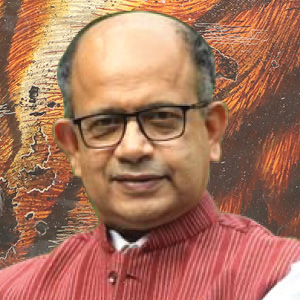
Dr Amar Patnaik
Member, Rajya Sabha
Amar Patnaik is an astute administrator, a highly skilled researcher and a global-minded India-focused leader in search of practical solutions to grassroots problems. He had a long career in civil services and was associated with UN and the World Bank for global external audit assignments. It is for his love to serve the people at the bottom of the pyramid, he quit and joined the Biju Janata Dal representing the state in the Rajya Sabha. He was member of the Joint Committee of Parliament on the Personal Data Protection Bill, 2019. He ensured that the bill goes through an extensive process of clause-wise consideration during the consultation within the JPC. As Rajya Sabha Member, he is Odisha’s voice in the Parliament. He has been a part of the Parliamentary Standing Committee on Finance and a member of the Parliamentary Consultative Committee on Forest, Environment and Climate Change. As head of the party’s IT wing, Amar guides on improving governance in the state; much of which can be attributed to his efforts.
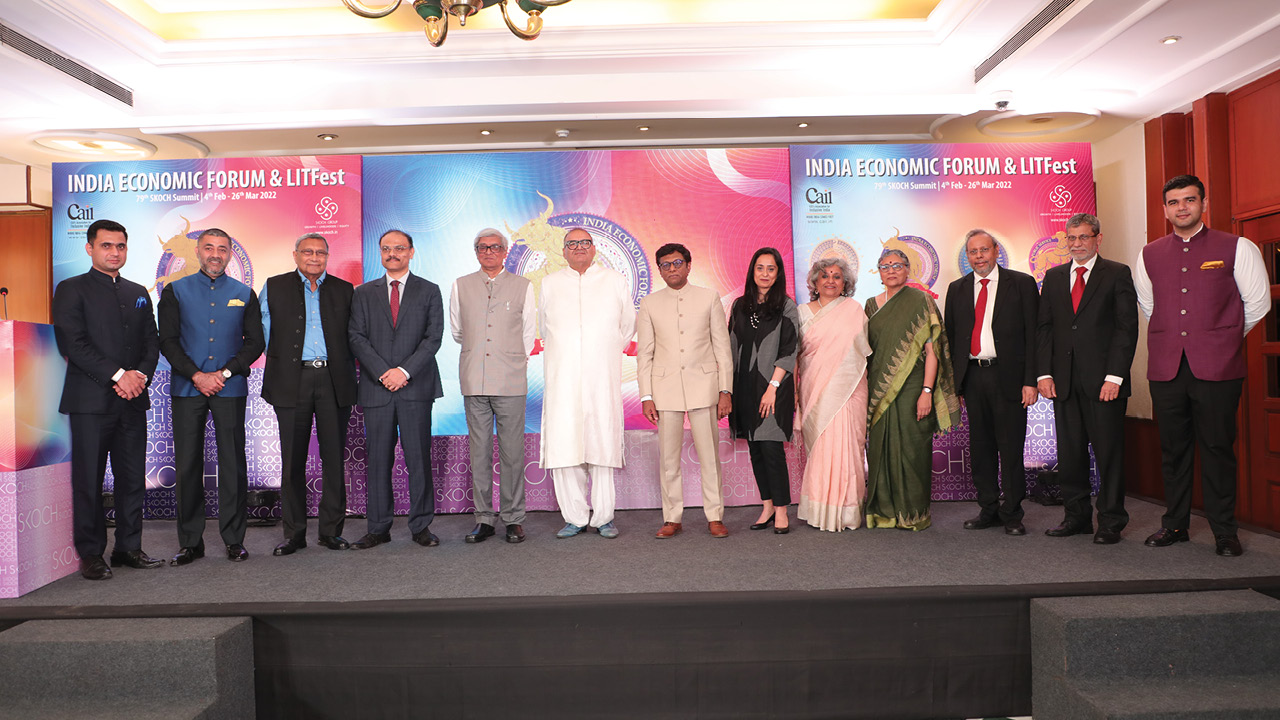
Dr Amar Patnaik at the 79th SKOCH Summit: India Economic Forum & LITFest
Dr Amar Patnaik
Member, Rajya Sabha
Key Points*
- Inequity is the central issue driving his transition from civil services to politics.
- Power asymmetries are identified as the root cause of social and economic inequity.
- Inequality persists across social, economic, cultural, and opportunity dimensions.
- Economic growth has not reduced inequity, as reflected in rising Gini coefficients.
- Climate change disproportionately impacts the poor, worsening existing inequities.
- Odisha’s repeated exposure to disasters highlights structural and regional inequities.
- Politics should be driven by service to people, not the pursuit of power.
- Grassroots initiatives like blood donation and community support reflect service-oriented governance.
- Strong alignment with principles of growth, livelihoods, and equity in public policy.
- Commitment to addressing inequity at state, national, and global levels.
* This content is AI generated. It is suggested to read the full transcript for any furthur clarity.
Transcript
Thank you Sameer. Thank you SKOCH Foundation for this incredible recognition. I’m really moved and humbled as well.
As he said, one of the primary reasons for me moving out from the civil services to join politics, in fact 10 years ahead of my retirement, was to solve this problem of inequity that we see.
Inequity has been the central point, the focus point of all my research, which I subsequently did a doctoral work on power asymmetries. And then I realized that power asymmetries are at the core of this inequity.
We find inequity not only in the social sphere, not only in economic growth areas, but even in culture, in opportunities, in skills—everywhere you find this inequity. What our Gini coefficient ordinarily captures is the economic inequity, and you would be surprised to find that despite GDP growth, inequity has only been increasing.
The largest rise in inequity was between 2000 to 2006. Since Dr. Debroy is here, and also my senior Jayant Sinha ji, I would request that this is something that we have to address.
We talk about climate change—anytime there is climate change or its impact, the biggest sufferers are the poor people, so inequity gets perpetuated.
This award I dedicate to the people of Odisha, who have faced this problem of inequity all their lives—whether in democratic decentralization, transfer of resources, or facing cyclones. You would be surprised to know that there have been about 90 disasters in Odisha in the last 100 years—every year, a couple of cyclones or super cyclones.
This is also dedicated to my leader, who has always inspired me on this issue of inequity. He has always told party members that politics is not a passion for power, it is a passion to serve the people.
You would be surprised to know that one of the goals in the party’s executive committee resolution was to reach out to people for blood donation, to help bury the dead where there are no facilities. During the pandemic, when there was a tremendous shortage of blood, it was collected from party workers and volunteers, creating a record.
SKOCH Foundation is one of the key platforms focused on growth, livelihoods, and equity. That is why I admire the work that they are doing. I value this award for the work they are doing on equity.
I remain committed to working on this issue of inequity in society—not only for Odisha, but for India and for the entire world, because we are all global citizens.
Thank you so much.