SKOCH Summit
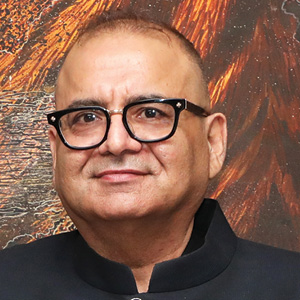
Mr Sameer Kochhar
Chairman, SKOCH Group
Reforms historian and author of best-seller ModiNomics, Sameer Kochhar is Chairman, SKOCH Group. He is a passionate advocate of social, digital and financial inclusion and is a foremost expert on governance and inclusive growth. His work has been acclaimed globally and endorsed by Mr Narendra Modi, Mr M Venkaiah Naidu, Dr Manmohan Singh, Mr Arun Jaitley, Mr P Chidambaram, Mr Yashwant Sinha, Dr C Rangarajan and Dr Montek Singh Ahluwalia and so on. In his thinking and writings and activities, his profound admiration for India's economic reforms and in extension, those outstanding personalities who strive to make these reforms more meaningful and broad-based comes out clear and unambiguous.
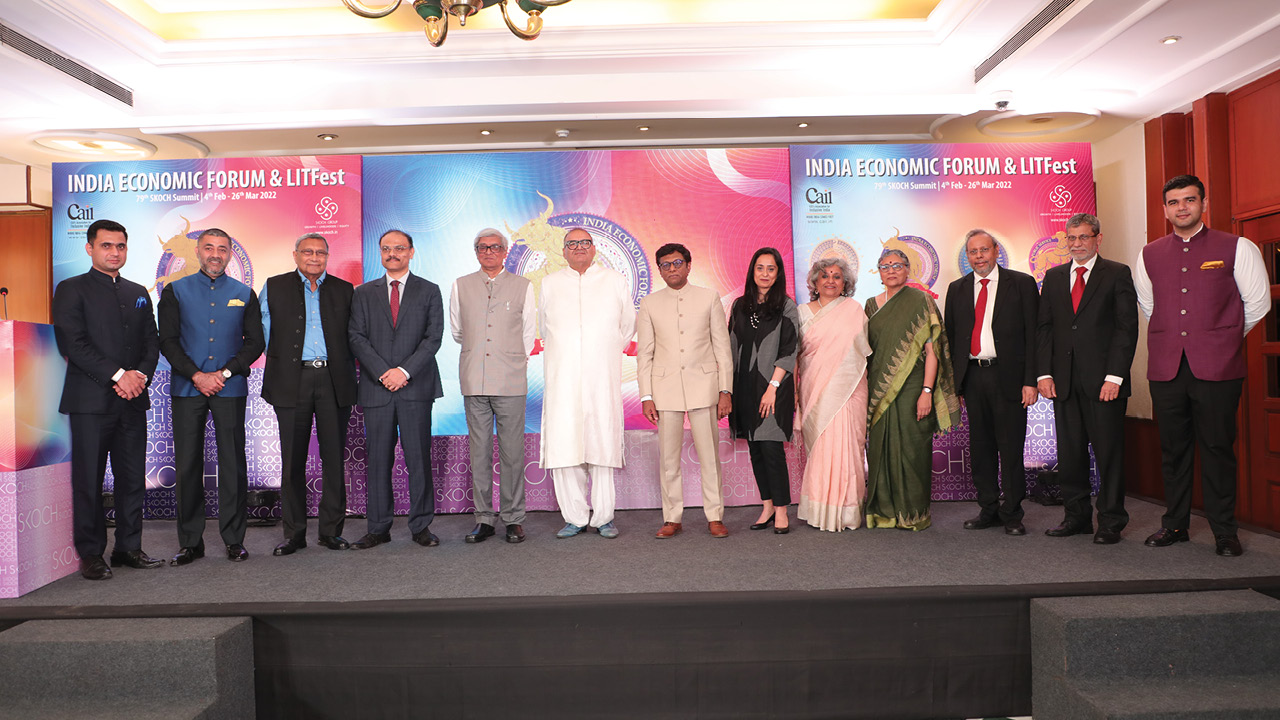
Mr Sameer Kochhar at the 79th SKOCH Summit: India Economic Forum & LITFest
Mr Sameer Kochhar
Chairman, SKOCH Group
Key Points*
- He humorously compares his preparation to global practices, referencing Rishi Sunak.
- He frames his insights through his 18 published books on India’s economic journey.
- The 1991 reforms are presented as a turning point driven by a balance of payments crisis.
- Economists are described as an underappreciated yet critical force in India’s survival and growth.
- The post-26/11 period is criticized as a weak phase for economic management.
- He contrasts governance-driven and economy-driven approaches using Modi vs others.
- His Modinomics series outlines inclusive growth, Jan Dhan, and Digital India roadmaps.
- He defends digital transformation while reflecting critically on demonetization and remonetization.
- The current focus is on infrastructure-led recovery and the need to monitor capital efficiency closely.
* This content is AI generated. It is suggested to read the full transcript for any furthur clarity.
Transcript
As you know, you are all SKOCH for me—you are family to me, and I have known you for years. I have been endorsed as the most blunt-speaking person by none other than Mr. Arun Jaitley, so pardon the way I talk, but that’s me.
When Rishi Sunak rises in the British Parliament to present the budget, he is allowed to have a gin and tonic to fortify himself. I have learned the best practice in the world, and I fortified myself with one Old Monk—just one—and Diet Coke.
Since I have published 18 books, I would like to talk to you through the prism of my books, because I’m sure you read none of them.
I had written a book called The Untold Story of Indian Reform: 1991–2016. It was on 3rd December 1989 when Mr. V. P. Singh, Prime Minister of India, rose in Parliament and said, “Our coffers are empty.”
Cut to December 1991. V. P. Singh is no longer there, Chandrashekhar is the Prime Minister, and he sends Dr. C. Rangarajan, then Deputy Governor, RBI, with the Chief Economic Advisor to the Finance Minister, Yashwant Sinha, Mr. Deepak Nayyar, to IMF to work out a bailout deal for India. While they were negotiating, the Chandrashekhar government fell, and IMF asked them which government they represented. Dr. Rangarajan told them, “You don’t worry about that, we will take care of it—you talk about the deal.” And the deal did come through.
If India is still here today, it is thanks to the economists. They are the most underappreciated community of people in India. People say you should listen to all economists but do what you want—I don’t think that’s true. Economists have a very important role to play.
Reforms were unleashed because of this balance of payments crisis, and we are all here. That beautiful story—what Montek did, what Chidambaram did, what Dr. Manmohan Singh did, what P. V. Narasimha Rao did—is captured in that book. If you are intrigued enough, buy it—it’s available online.
Then we had the Mumbai attacks in 26/11. After the reforms, until 26/11, were some of the highest growth years of India. Then we had 26/11, and we had to move Mr. Chidambaram to the Ministry of Home Affairs instead of the Ministry of Finance.
I have no political affiliations, and I have no reluctance in saying that from there on till he came back to the Ministry of Finance was the darkest period of the Ministry of Finance. We possibly had the most underperforming Finance Minister ever in Mr. Pranab Mukherjee. By the time he came back in July 2012, it was too late to do anything about the economy, and the stage was set for Prime Minister Modi to come in.
They knew that the economy was their weak point. At that time, Congress was attacking the economic credentials of candidate Modi, who had not even been declared candidate then.
It was September 2013 when Mr. Modi called me—I remember it was Gandhinagar, Mahatma Mandir—and he said that all these Congress leaders, and Chidambaram specifically, were saying that his knowledge of economics can fit behind a postage stamp. He asked what I thought about it.
I said, “Mr. Modi, I think your knowledge is about the same—the approach is different. He is more economy-driven and you are more governance-driven.”
There and then, I decided to write a book called Modinomics on his request. The theme of Modinomics was inclusive economics and inclusive governance. He talked about the Gujarat model and how economics and governance worked together to bring about the miracle that was Gujarat at that point in time.
No one questioned his economic credentials for several years after that.
In the Modinomics series, in quick succession, I did two more books. The first was Modinomics, which was about the Gujarat model and how he used governance and economics together to make Gujarat a star state. It was a star state even as per our ratings based on outcomes because of the projects we had studied.
On 15th August 2014, during a panel discussion on a TV channel, people were discussing what the Prime Minister would wear. I said forget what he is going to wear—I think he is going to target poverty. On 15th August 2014, he talked about the Jan Dhan Yojana, and he launched it in September 2014.
I came out with the second book in the Modinomics series called Defeating Poverty: Jan Dhan and Beyond, which laid out the entire roadmap—whether it is DBT, JAM Trinity, loans to MSMEs through Mudra Yojana, or targeting women beneficiaries. All these factors were documented much ahead of them happening, and that is the roadmap the Modi government followed.
In early 2015, I came out with the third book called Digital India, Developed India. It was an edited volume and laid the roadmap for how Digital India unfolded from 2015 to 2019.
One innocuous recommendation in that book was that we should extinguish currency and move towards a digital rupee. What I meant was a CBDC—a central bank digital currency. What it got translated into, and I do not claim responsibility for it at all, was demonetization.
But the silver lining was the UPI movement. I still hold that the bigger mistake than demonetization was remonetization. Having taken the hit, we should have stayed on course—the velocity of money would have boosted GDP significantly.
In early 2019, I wrote a book called India 2030, where we talked about a $10 trillion economy by 2030. Mr. Jaitley picked up the theme, and his February budget focused on that vision.
Later, the target was accelerated to $5 trillion by 2024. We all know COVID happened, and that has delayed things. That has been the focus of discussions at the India Economic Forum, and we have developed several recommendations which we will share.
This year, the forum has focused on how we get back to growth. With scarce investments, the government is looking at infrastructure as the savior of last resort. Many economists agree with this; others argue for greater focus on health, education, and human capital.
While that debate continues, infrastructure investment remains central. My next research focuses on the incremental capital-output ratio—we need to keep a close watch on it.
When I return in the second part of this conference, I will speak about where we stand on Gati Shakti and infrastructure.
With that, I invite Kulmeet from the CEOs’ Association for Inclusive India. He is the moving force behind what we do. He also pays for the lunch, but he is a thinker in his own right and has written on sustainability, climate change, and the economy—topics beyond the traditional scope of SAP.
Kulmeet.